

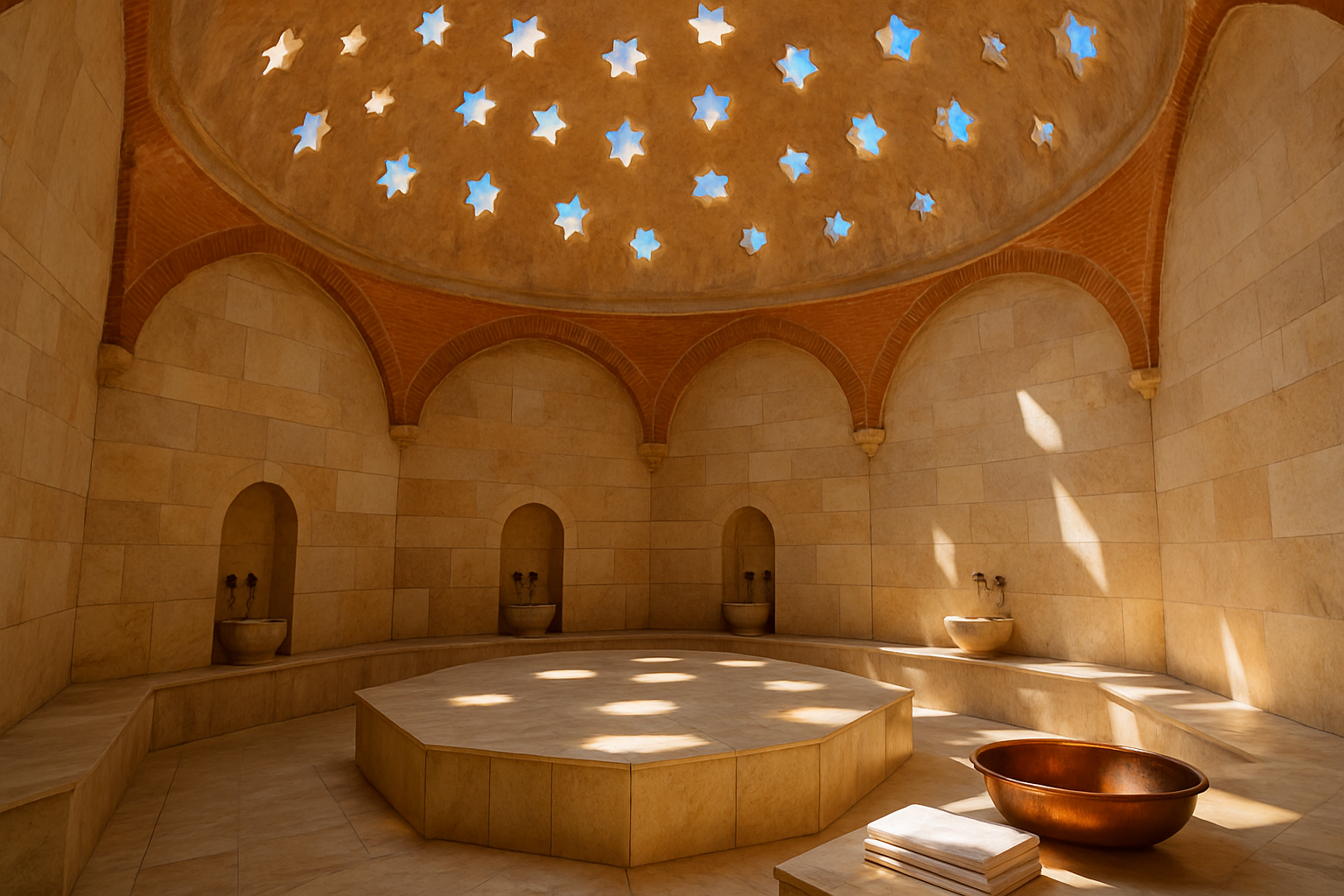
An Istanbul Turkish bath experience moves through heat, scrub and massage: you sweat on a heated marble platform, get scoured with a rough kese mitt, receive a foam massage, then rinse with cool water. Historic hamams and modern spa hammams both follow this sequence, though timing and extras vary by venue.
- Typical duration: 45 to 135 minutes depending on the package
- Dress code: a peştemal wrap is provided at the door, no swimwear required underneath
- Booking ahead: recommended for historic hamams, especially at weekends and in July and August
- Sections: most historic hamams keep men and women completely separate
What Happens During a Turkish Bath, Step by Step?
| Option | Duration |
|---|---|
| Cağaloğlu Hamamı | 45-135 min |
| Çemberlitaş Hamamı | – |
| Hürrem Sultan Hamamı | 45-110 min |
| Gedikpaşa Hamamı | 60-90 min |
| Şifa Hamamı | 60-120 min |
| Turkish bath and spa, Laleli | 50-125 min |
| Turkish bath and spa, Taksim | 50-100 min |
A traditional session follows five fixed stages: warming, scrubbing, foam massage, rinsing and rest.
The order rarely changes between venues, though the time spent on each stage can differ.
- Warming: you lie on the göbek taşı, a heated marble platform at the centre of the room, until you sweat freely, usually 15 to 20 minutes.
- Scrubbing: an attendant, called a tellak for men or a natır for women, works over your skin with a kese.
- Foam massage: a cotton bag filled with soap is squeezed to build thick foam, then spread over the whole body.
- Rinsing: warm water is poured from copper bowls, finishing with a cooler splash that closes the pores.
- Rest: you’re wrapped in dry towels and often served tea before dressing.
Some modern spa hammams add a private oil massage after the rinse, which is why their sessions run longer than the historic version of the ritual.
The order itself is old and well documented: Britannica describes the Turkish bath as warm air, then steam or hot-air immersion, a massage and a cold rinse, taken through a series of domed rooms.
What Is a Kese and Why Does It Matter?
A kese is a coarse woven mitt used to lift dead skin once the steam has softened it.
Without the warming stage first, a kese would feel harsh. That’s why attendants always let you sweat properly before the scrub begins.
Most first-time visitors are surprised by how much skin comes away. It’s a normal part of the process, not a sign anything is wrong with your skin.
Historic Hamams and Modern Spa Hammams
Istanbul offers two distinct versions of the same tradition: centuries-old stone hamams with domed ceilings, and contemporary spa hammams that add extras like private massage rooms.
Both follow the same core ritual described above, but the setting and pace differ noticeably.
| Type | Setting | Sections | Best for |
|---|---|---|---|
| Historic hamam (Old City) | Ottoman-era stone building, domed ceiling | Separate for men and women | Travellers who want the classic ritual |
| Neighbourhood spa hammam (Taksim, Şişli) | Modern building, smaller scale | Separate, female therapists only | Shorter visits, easier booking |
Neither format is objectively better; the choice depends on whether you want the atmosphere of a 15th or 16th century building or the convenience of a nearby modern spa.
What Should You Wear and Bring?
You wear only the peştemal, a thin cotton wrap, handed to you at the entrance; swimwear underneath is optional, not required.
Staff usually provide everything else you need for the session itself.
- A hair tie, if your hair is long, since it gets wet during rinsing
- A change of underwear for afterwards
- A small amount of cash or a card for tipping the attendant
- Nothing valuable in your pockets, since lockers are usually basic
Flip-flops are typically supplied at the door, so you don’t need to bring your own footwear.
What Shapes the Price of an Istanbul Turkish Bath?
Two things set what a hamam visit costs: the building and the service. The historic Ottoman baths of the Old City — Cağaloğlu Hamamı, Çemberlitaş Hamamı and Hürrem Sultan Hamamı — sit at the upper end of the range. Neighbourhood baths such as Gedikpaşa Hamamı and Şifa Hamamı in Sultanahmet, and the spa hammams around Taksim and Şişli, sit below them.
The service tier matters just as much as the address. A basic entry buys you the heated marble and the water; the full ritual adds a kese scrub and a foam wash from an attendant, and most venues sell oil massage, clay treatments or a facial as add-ons. Session lengths follow the same pattern, running from roughly 45 minutes at the short end to a little over two hours for the longest packages.
Because venues adjust their rates through the year, and because the same hamam may sell several packages at once, check the venue’s own booking page for what applies on the day you plan to go rather than relying on a figure quoted elsewhere.
Where Should You Go for a Hamam Visit?
Most historic hamams sit within an easy walk of the Old City’s main sights, so you can pair a visit with sightseeing.
Cağaloğlu, Çemberlitaş, Hürrem Sultan and Şifa hamamları all cluster near Sultanahmet Square’s Ottoman-era streets, making it simple to combine a bath with a morning of monuments.
If you’re spending the day shopping at the Grand Bazaar Istanbul, Gedikpaşa Hamamı is a short walk south.
Many visitors also fold in an underground stop first; our earlier guide to the Theodosius Cistern covers the mapping show and dervish performance held nearby, which pairs well with an evening hamam session afterwards.
On the European side away from the Old City, spa hammams around Beyoglu district’s spa hammams near Taksim and Şişli suit travellers staying closer to the modern city centre.
Getting There: Trams, Metro and Walking Times
The T1 tram line stops at Sultanahmet and Çemberlitaş, both within a five to ten minute walk of the historic hamams.
From either stop, Cağaloğlu Hamamı, Çemberlitaş Hamamı and Şifa Hamamı are all reachable on foot without needing a taxi.
If you’re combining the visit with views from Galata Tower, the walk down towards the Old City side takes roughly 20 to 25 minutes, or you can take the tram across the Galata Bridge.
For journey planning and the Istanbulkart travel card used on trams, buses and the metro, check the official Istanbulkart transport site before you arrive.
General visitor information, including current opening arrangements around major sights, is published on Türkiye’s official tourism portal.
The unwritten rules matter as much as the steps: Turkish bath etiquette and what actually happens inside covers the part first-time visitors usually ask about.
Frequently Asked Questions
Do men and women bathe together in Istanbul hamams?
No. Historic hamams keep completely separate sections and staff for men and women, and most modern spa hammams follow the same rule.
Is it normal to be scrubbed by a stranger?
Yes, this is the standard part of the ritual. The tellak or natır scrubs everyone who books the full service, and it’s treated as routine rather than unusual.
How long does a Turkish bath visit take?
About 60 to 90 minutes for the core ritual at most venues, though some packages run from 45 minutes up to well over two hours with extras included.
Do you need to book ahead?
Yes, especially at weekends and during July and August, when the well-known historic hamams fill up. Booking a specific time slot avoids waiting around once you arrive.
Is nudity required inside the hamam?
No. You keep the provided peştemal wrapped around you throughout the session, and staff work around it rather than asking you to remove it.
What’s the difference between a historic hamam and a modern spa hammam?
A historic hamam follows the traditional ritual inside an Ottoman-era stone building, while a modern spa hammam offers the same steps in a smaller, contemporary setting, often with added massage options.
If you’d rather compare venues, check availability and book a specific time slot before you travel, Istanbul Hamam’s booking platform lists historic hamams and modern spa hammams across the city side by side, which is the simplest way to lock in a hamam visit around the rest of your Istanbul itinerary.

Comment (0)