

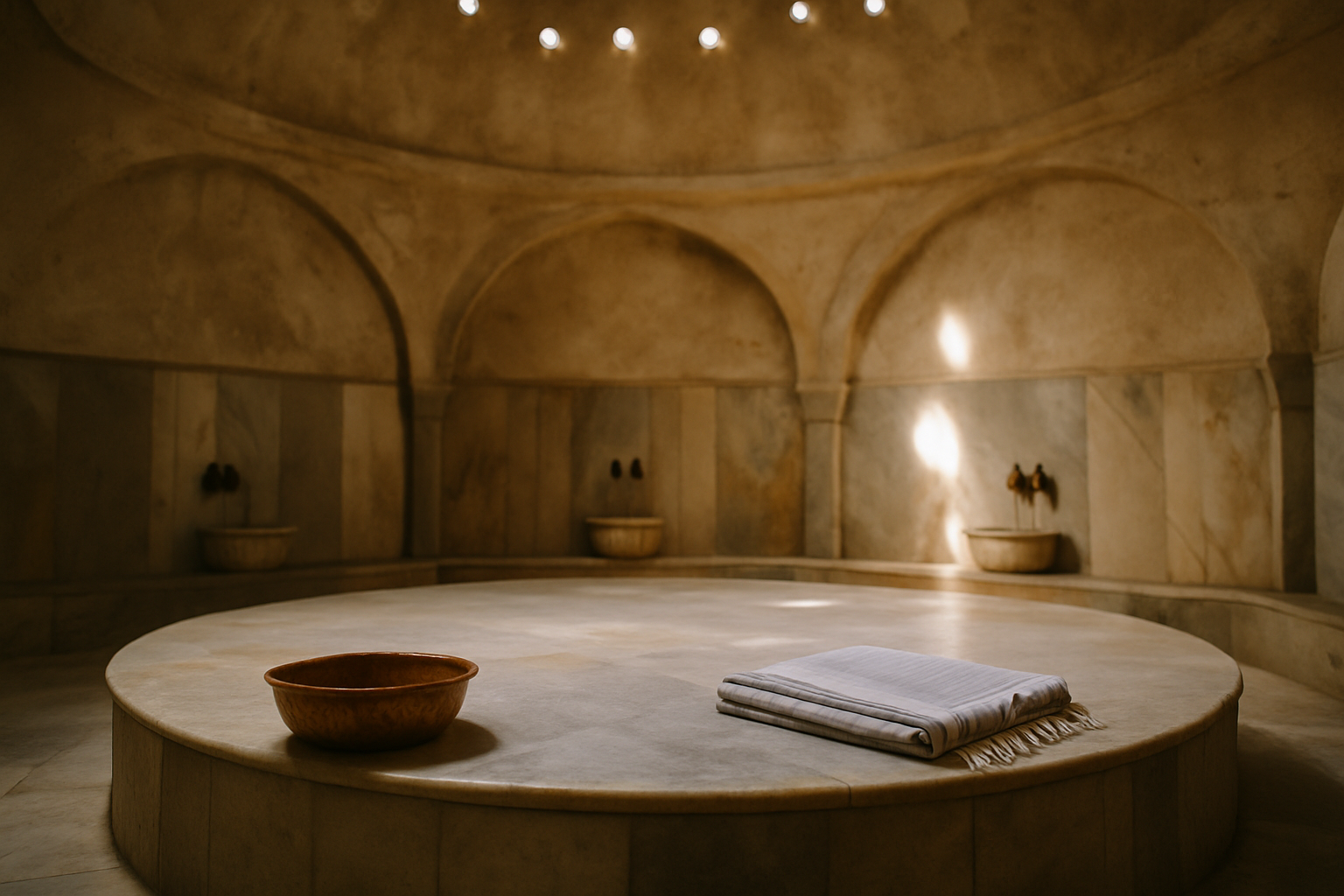
Turkish bath etiquette follows a fixed sequence: undress in a private cubicle, wrap in a peştemal, warm up on a heated marble platform, get scrubbed with a coarse kese mitt, receive a foam massage, then rinse with cold water. Sessions typically run 45 to 135 minutes depending on the hamam you choose.
Nothing about the process requires prior experience, and attendants guide first-time visitors through every stage.
- Typical duration: 45 minutes to around two hours, depending on the package
- Booking: worth doing a day ahead, especially in July and August
- Dress code: none of your own clothing needed; a peştemal is supplied
- Sections: most hamams separate men and women completely, with gender-matched attendants
- Location: the best-known historic hamams cluster around Sultanahmet and the Old City
What Happens During a Turkish Bath, Step by Step?
| Option | Price | Duration |
|---|---|---|
| Cağaloğlu Hamamı | from €90 | 45-135 min |
| Çemberlitaş Hamamı | from €90 | – |
| Hürrem Sultan Hamamı | from €110 | 45-110 min |
| Gedikpaşa Hamamı | from €50 | 60-90 min |
| Şifa Hamamı | from €40 | 60-120 min |
| Turkish bath and spa, Laleli | from €50 | 50-125 min |
| Turkish bath and spa, Taksim | from €45 | 50-100 min |
A Turkish bath follows five stages that rarely change from one hamam to another: undressing, warming, scrubbing, foam massage and a final rinse. Each stage happens in its own room or on its own fixture, and an attendant guides you through the process rather than leaving you to work it out alone.
Male attendants are called tellak and female attendants are called natır, and in every gender-separated hamam your attendant will be the same gender as you. The whole sequence is designed to move at a slow, unhurried pace, so there is no reason to rush between rooms.
For background on hamam culture as part of the country’s wider heritage, Türkiye’s official tourism portal is a useful starting point.
The warming stage happens on the göbek taşı, a heated marble platform usually raised at the centre of the main chamber, whose name translates literally as “belly stone”.
You lie on it wrapped in your peştemal, a thin cotton or linen wrap that replaces your own clothing for the duration of the visit, while the heat opens your pores and relaxes your muscles. This stage typically lasts fifteen to thirty minutes, and it is the part attendants usually tell visitors to slow down and simply lie still for.
After that comes the kese, a coarse woven mitt used to scrub away dead skin, followed by a foam massage made from whipped soap suds, and finally a cold-water rinse that closes the pores again.
- Undressing and changing into a peştemal in a private cubicle
- Warming on the göbek taşı for fifteen to thirty minutes
- Kese scrub to remove dead skin
- Foam massage with whipped soap
- Cold-water rinse to finish
What to Wear and Bring to a Hamam
You do not need to bring anything specific to a Turkish bath, since hamams supply the peştemal, soap, towels and sandals as part of the entry price. Most visitors wear their own underwear or a swimsuit underneath the wrap, and this is entirely normal rather than a sign of unfamiliarity with local custom.
The wooden sandals you are given at the door are called nalın, and they keep your feet off the heated and often wet marble floors. Bring your own hairbrush or moisturiser if you have particular preferences, but the venue covers everything else.
Swimwear is optional rather than required, and many local visitors go through the whole ritual wearing nothing but the peştemal, which is designed to stay wrapped around you throughout the public parts of the visit. Jewellery, watches and phones are best left in the lockable cubicle provided at the entrance, since humidity and soap suds are not kind to electronics.
If you wear contact lenses, consider switching to glasses beforehand, since steam can make lenses uncomfortable. None of this needs planning in advance; every hamam explains the basics to first-time visitors as they arrive.
How Do the Men’s and Women’s Sections Work?
Most Istanbul hamams separate men and women completely, either in different rooms at the same time or through different opening hours, with attendants matched to your gender throughout. This separation is the default at historic hamams such as Çemberlitaş Hamamı and Cağaloğlu Hamamı, both of which keep fully separate sections with their own göbek taşı and gender-matched tellak or natır.
A handful of newer venues, including Şifa Hamamı in Sultanahmet, run as mixed-gender hammams instead, which suits couples or families who want to go through the ritual together. Check which model a hamam uses before you book, since the two are quite different experiences.
Some neighbourhood hamams, such as those in Laleli, Taksim and Şişli, use female therapists only regardless of who is being treated, which is worth knowing if you have a preference either way.
This detail varies hamam by hamam rather than being a fixed national rule, so it is always listed on the venue’s own booking page rather than left to guesswork. None of these arrangements affect the ritual itself, only who is in the room with you and who performs the scrub and massage.
If modesty is a concern, ask when you book rather than when you arrive at the door.
Historic Hamams in Istanbul’s Old City
Istanbul’s best-known hamams sit within easy walking distance of the city’s main historic sights, which makes them simple to combine with a day of sightseeing. Çemberlitaş Hamamı and Cağaloğlu Hamamı both date from the Ottoman period and sit close to the covered stalls of the Grand Bazaar, making a hamam visit an easy add-on after an afternoon of shopping.
Hürrem Sultan Hamamı, built for the wife of Suleiman the Magnificent, stands near the Süleymaniye Mosque complex, a külliye that also included baths, schools and a hospital in Ottoman times.
If you are building a first itinerary for the city, our guide to planning your first days in Istanbul is a useful starting point for working out how these sights fit together over two or three days.
What Does a Turkish Bath Cost in 2026?
Entry-level Turkish bath sessions in Istanbul start from around €40 per person as of September 2026, according to Istanbul Hamam’s own venue listings, with well-known historic hamams pricing higher than neighbourhood venues.
Çemberlitaş Hamamı and Cağaloğlu Hamamı both start from €90 per person as of September 2026, according to the same source, reflecting their central Old City locations and longer treatment times. Hürrem Sultan Hamamı, the most elaborate of the group, starts from €110 per person as of September 2026, also according to the operator’s own booking pages.
Smaller neighbourhood hamams in Laleli, Taksim and Şişli sit lower, starting from around €45 to €50 per person over the same period, which makes them a practical option if budget matters more than Ottoman-era architecture.
Session length varies with the package rather than the price alone, running from around forty-five minutes at the shorter neighbourhood venues up to well over an hour at Cağaloğlu Hamamı and Hürrem Sultan Hamamı.
Longer sessions usually add extra massage time or oil treatments on top of the standard kese-and-foam routine, so check what is included before comparing two venues on price alone. None of these figures include tipping, which is customary but left to your own judgement rather than fixed by the venue.
Booking ahead is worth doing in July and August, when hamams near the main sights fill up with both visitors and Istanbul residents.
What Etiquette Mistakes Should You Avoid?
The most common mistake is treating the göbek taşı stage as optional and rushing straight to the scrub, when the warm-up is what makes the kese comfortable and effective. Skipping the cold rinse at the end is another frequent mistake, since it is what closes the pores again and leaves you feeling refreshed rather than overheated.
Wandering between rooms without your peştemal properly wrapped is considered poor etiquette in the shared areas of a hamam, even in gender-separated venues where the ritual itself is entirely normal. Bringing your own soap or scrubbing tools is unnecessary and can come across as distrustful of the attendant, who uses house products suited to the venue’s water and marble.
For general practical information on public facilities and services across the city, Istanbul’s provincial governorate site is a reliable reference.
Tipping the tellak or natır directly and in cash at the end of the session is the norm, rather than adding it to a card payment at the front desk. Talking loudly or using a phone inside the steam rooms is discouraged, since hamams are traditionally quiet, unhurried spaces even when busy.
First-time visitors sometimes feel awkward about the scrubbing and massage stages, but the physical contact involved is entirely professional and no different from a standard spa treatment. If anything about the process is unclear, asking the attendant directly is normal and expected, rather than something visitors are supposed to already know.
Two companion guides go deeper from here: what to experience in an Istanbul Turkish bath walks through a full session, and Turkish hamams compared with modern spas sets the historic bathhouses against the newer wellness centres.
Frequently Asked Questions
Do you wear anything inside a Turkish bath?
Yes, a peştemal wrap is provided and worn throughout, and many visitors also keep their own underwear or swimsuit on underneath it.
Is a Turkish hamam always separated by gender?
No, most historic hamams separate men and women completely, but a small number of venues, such as Şifa Hamamı, run as mixed-gender hammams instead.
How long does a typical hamam visit take?
About 45 minutes to two hours, depending on the venue and whether you add extra treatments such as an oil massage.
Do I need to book a hamam visit in advance?
Yes, especially at well-known hamams in the Old City during July and August, when demand from both visitors and residents is highest.
Is nudity expected during the ritual?
No, the peştemal stays wrapped around you for the shared parts of the visit, and full nudity is not expected or required.
Should I tip the attendant?
Yes, tipping the tellak or natır directly in cash at the end of the session is customary, though the amount is left to your own judgement.
Working out which hamam suits your budget, your schedule and your comfort level is easier once you can compare venues side by side rather than guessing from a handful of reviews.
Istanbul Hamam’s own booking platform lists historic bathhouses and modern spa venues across the city with their current prices and session details, which is the practical way to book once you know what kind of visit you want.

Comment (0)