

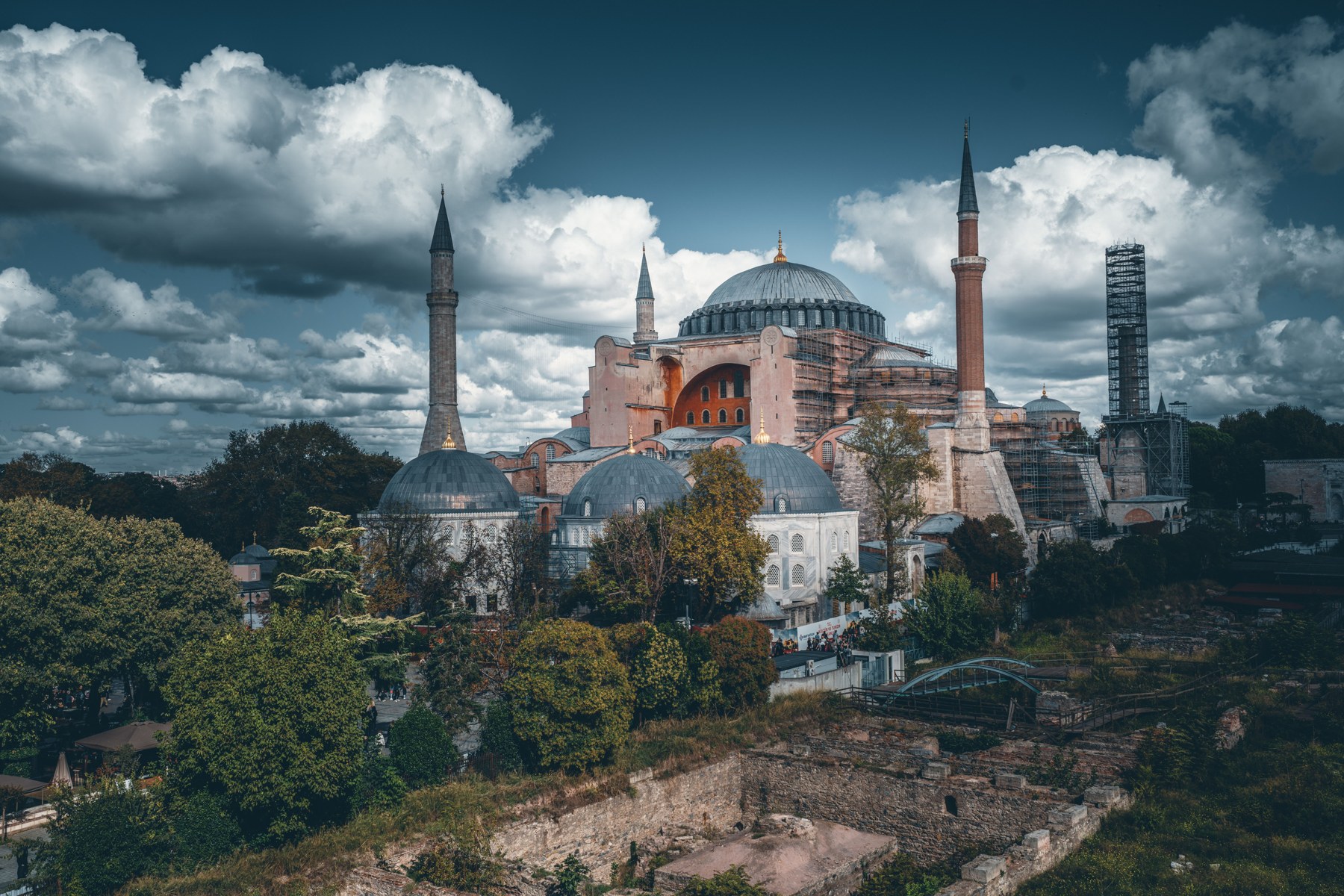
Hagia Sophia is Istanbul’s most visited religious monument and the city’s most famous former basilica, but it sits among several other Byzantine-era churches and one underground “basilica” that are easy to combine in a single day in Sultanahmet. Together they span roughly thirteen centuries of history within a fifteen-minute walk of each other.
- Time needed: About half a day to see Hagia Sophia, Little Hagia Sophia and the Basilica Cistern together.
- Nearest tram stop: Sultanahmet, on the T1 tram line, a short walk from Hagia Sophia’s entrance.
- Dress code: Shoulders, knees and midriff covered; women are asked to cover their hair before entering the prayer hall.
- Closed for prayer: Hagia Sophia’s prayer hall closes to sightseers for several short windows a day during Muslim prayer times.
- Booking ahead: Timed entry to Hagia Sophia’s upper gallery and to the Basilica Cistern is worth arranging in advance during the busier summer months.
How Old Is Hagia Sophia?
Hagia Sophia dates to 537 AD, when the Byzantine emperor Justinian I completed it as the cathedral of Constantinople.
The name comes from the Greek for “Holy Wisdom”, and the building served as a church for over nine hundred years before the Ottoman conquest of 1453.
A basilica, in the architectural sense, is a long rectangular hall with a central nave and side aisles, a plan borrowed from Roman public buildings and used for early Christian churches across the Mediterranean.
After 1453, Sultan Mehmed II converted Hagia Sophia into a mosque, adding minarets and plastering over the Christian mosaics rather than destroying them. It became a museum in 1935, and in 2020 it returned to use as a working mosque, open to visitors outside prayer times.
The full story, including the mosaic restoration and the gallery route, is covered in our complete planning guide to Hagia Sophia, and the practical visiting details sit on the Hagia Sophia location page.
What Are the Other Historic Basilicas Worth Visiting?
Istanbul holds a small cluster of Byzantine-era churches near Hagia Sophia, each built on the same basilica floor plan of a long hall with a central nave.
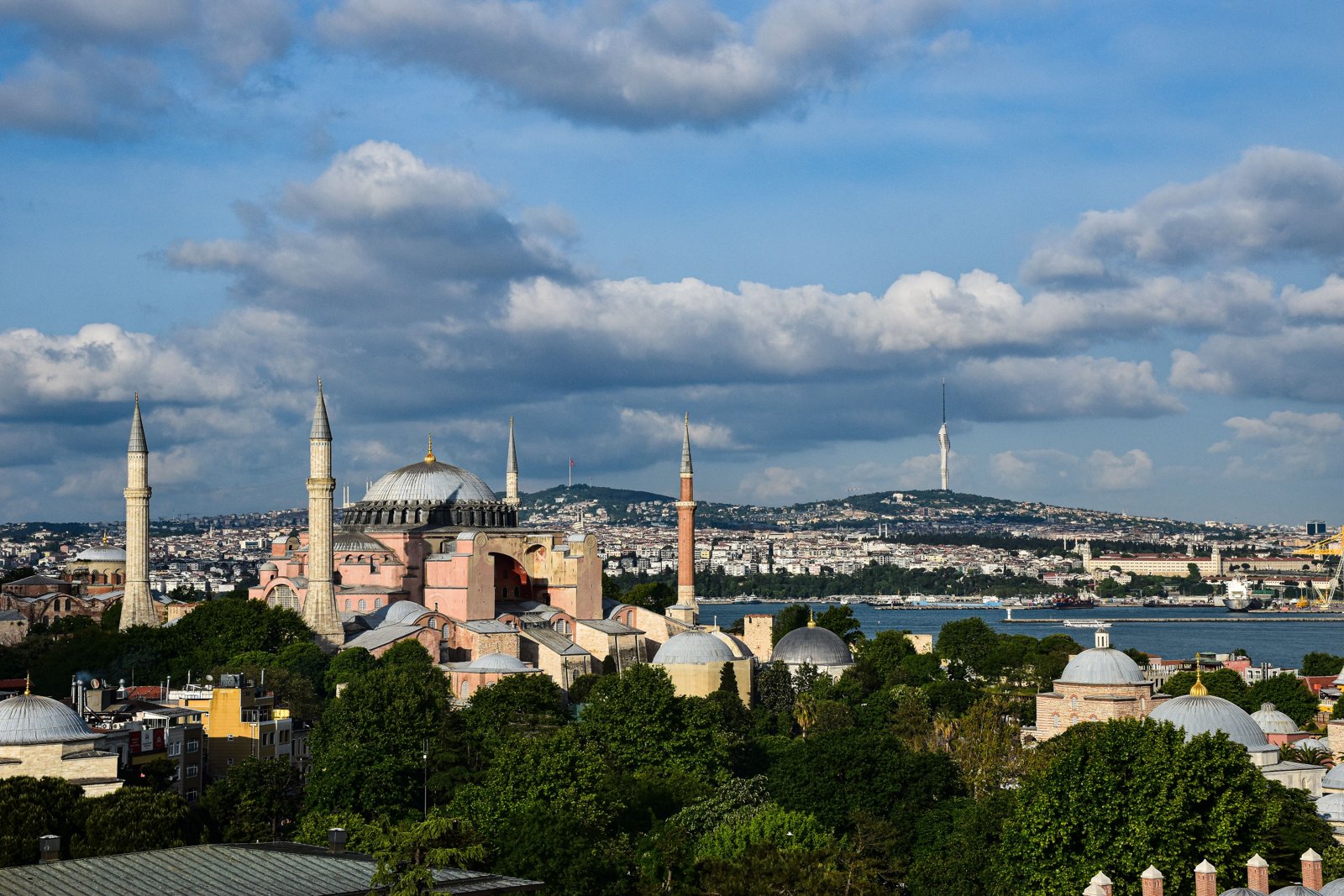
- Little Hagia Sophia (Küçük Ayasofya Camii): a smaller domed church a short walk south of the old Hippodrome.
- Hagia Irene: Constantinople’s first cathedral, standing inside the outer courtyard of Topkapı Palace.
- Church of St Saviour in Chora (Kariye): a Byzantine church in the Edirnekapı district, known for its mosaics and frescoes.
None of these require the planning that Hagia Sophia does, since they see far fewer visitors and rarely involve a queue.
| Site | Built | Status today | Nearest stop |
|---|---|---|---|
| Hagia Sophia | 537 AD | Active mosque, open to visitors | Sultanahmet (T1) |
| Little Hagia Sophia | c. 536 AD | Active mosque | Sultanahmet (T1), short walk |
| Basilica Cistern | 532 AD | Underground sightseeing site | Sultanahmet (T1) |
| Hagia Irene | 4th century, rebuilt 6th | Occasional concert venue inside Topkapı Palace | Gülhane (T1) |
Little Hagia Sophia (Küçük Ayasofya Camii)
Little Hagia Sophia is a sixth-century church that predates its larger namesake by a year or so.
It was built under Justinian as the Church of Saints Sergius and Bacchus, close to the old chariot-racing ground now known as the Hippodrome. Its octagonal plan and worn marble columns give a sense of how Hagia Sophia might have felt before centuries of restoration.
The walk down from Sultanahmet Square takes most visitors under ten minutes, downhill through quiet residential streets rather than tourist shops.
Like Hagia Sophia, Little Hagia Sophia functions as an active mosque, so the same dress rules apply and visits pause briefly around prayer times.
Is the Basilica Cistern Really a Basilica?
No, not in the architectural sense. The Basilica Cistern is an underground water reservoir, named after the large public basilica that once stood above it in Byzantine Constantinople.
In Byzantine usage, a basilica could also mean a large public square or hall used for civic business, separate from its later church meaning. Justinian had the cistern built in 532 AD to store water piped in from forests outside the city, using over three hundred columns, many of them reused from older, demolished buildings.
Two carved Medusa head column bases, set upside down and sideways, are the detail most visitors remember.
The Basilica Cistern location page has the current walkway route and photography notes; the floor is uneven and often damp, so flat shoes make more sense than sandals.
How to Plan a Day Visiting Istanbul’s Basilicas?
Start at Hagia Sophia first thing, then work outward on foot to the smaller sites, finishing underground at the cistern.
- Arrive at Hagia Sophia near opening time to avoid the longest queue of the day.
- Walk to the Hippodrome and Sultanahmet Square, both a few minutes away.
- Continue to the Basilica Cistern, a short walk north of the square.
- Finish at Little Hagia Sophia, roughly ten minutes further south.
All four sites sit within easy reach of the Sultanahmet tram stop on the T1 line, so there is no need for a taxi between them. Anyone planning a longer Istanbul itinerary around this district will find a fuller city overview on the Istanbul location page.
Official opening arrangements for state monuments, including any temporary closures, are published by Türkiye’s Ministry of Culture and Tourism through muze.gov.tr.
Dress Code and Visiting Etiquette
Modest dress is required inside Hagia Sophia and Little Hagia Sophia because both are active mosques.
Shoulders, knees and midriffs should be covered for everyone, and women are asked to bring or borrow a headscarf before entering the prayer hall itself; scarves are usually available at the entrance for those who arrive without one. Shoes come off before stepping onto the carpeted prayer area, and there is somewhere to leave them at the door.
Flash photography and tripods are generally discouraged inside the prayer hall out of respect for worshippers, who use the space daily alongside sightseers.
General planning information for travellers, including seasonal advice and safety basics, is maintained by Türkiye’s official tourism portal at goturkiye.com, which is a useful cross-check if an opening time or rule has changed since this guide was last reviewed in September 2026.
Frequently Asked Questions
How long does it take to see Hagia Sophia?
About 45 minutes to an hour for the main hall, longer if the upper gallery is open and you want to see the mosaics closely.
Is Hagia Sophia a mosque or a museum?
A mosque. Hagia Sophia returned to use as a working mosque in 2020, though it remains open to visitors outside prayer times.
Do I need to book tickets in advance?
Only during busy months. Advance timed entry helps most at Hagia Sophia’s upper gallery and at the Basilica Cistern in July and August.
What is the nearest tram stop to Hagia Sophia?
Sultanahmet, on the T1 tram line, a short walk from the entrance through Sultanahmet Square.
Are women required to cover their hair at Hagia Sophia?
Yes, but only inside the prayer hall; headscarves are provided at the entrance for anyone who needs one.
What is the difference between the Basilica Cistern and a basilica church?
Nothing structural. The cistern takes its name from the Byzantine public basilica that once stood above it, not from any church architecture inside it.
Hagia Sophia remains the centrepiece of any visit to historic Istanbul, but the shorter walk to Little Hagia Sophia and down into the Basilica Cistern rounds out the picture of what “basilica” meant across different centuries in this city.
None of these sites need a guide or a group booking: a comfortable pair of shoes, a scarf in your bag, and a morning free of the clock are really all the planning they ask for.

Comment (0)