

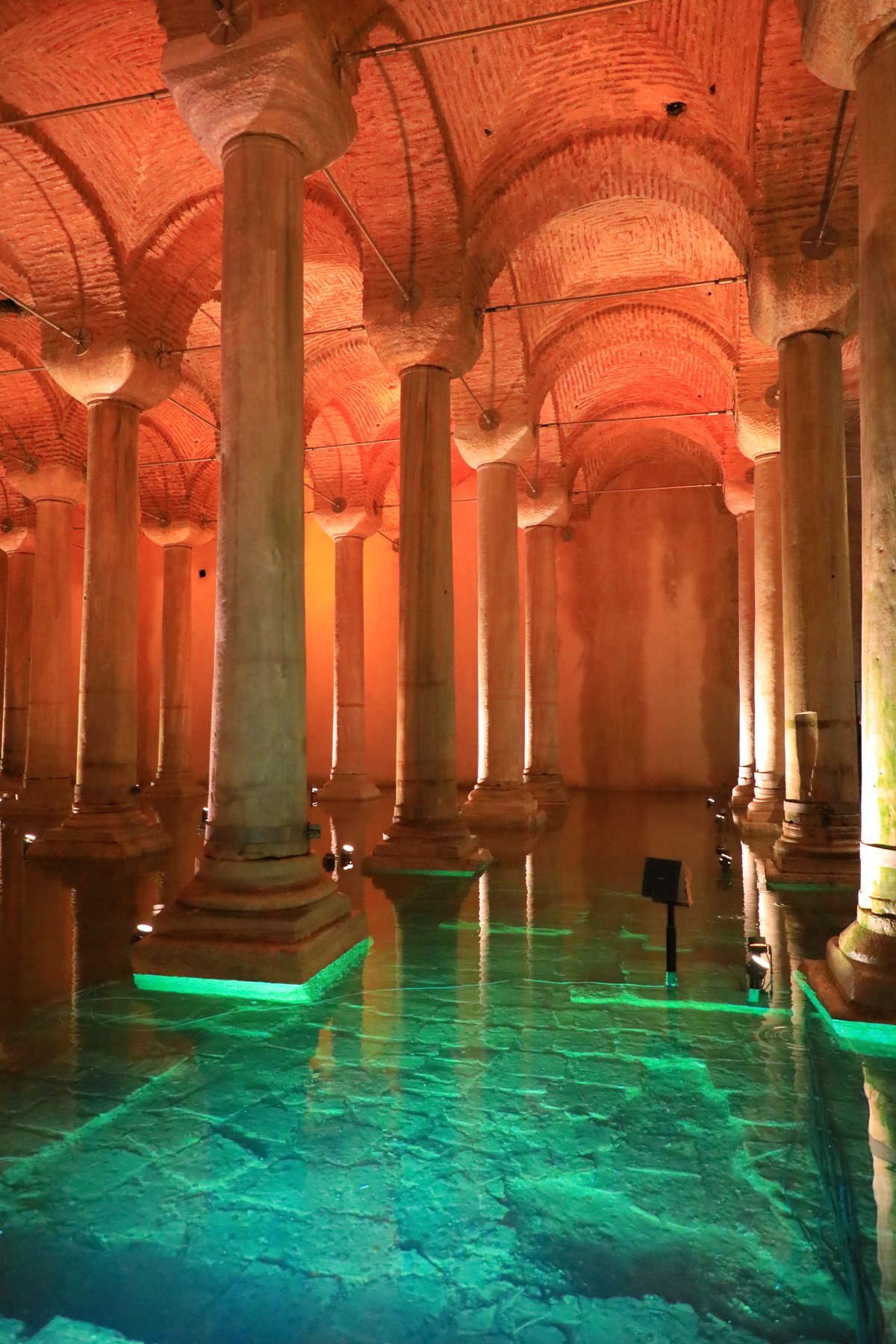
Yes, several underground cisterns in Istanbul are open to visitors today, chiefly the Basilica Cistern and the Cistern of Theodosius (Şerefiye Sarnıcı), both in the old city. Each is a restored Byzantine water reservoir with marked walkways, and each takes under an hour to see properly.
- Best for: first time visitors to the old city with an hour or two spare between sights
- Nearest tram stop: Sultanahmet, on the T1 tram line, a short walk to both cisterns
- Typical visit time: about 45 minutes at the Basilica Cistern, about an hour at the Cistern of Theodosius
- Booking ahead: worthwhile for the Cistern of Theodosius evening dervish performance, which has a fixed start time
Which Underground Cisterns Can You Visit in Istanbul Today?
Two Byzantine era cisterns in the old city are set up for regular public visits: the Basilica Cistern and the Cistern of Theodosius.
Both sit within walking distance of Sultanahmet Square, the historic heart of the city where the Byzantine and Ottoman empires both built their palaces and water infrastructure.
A handful of other cisterns exist under the old city, some used as cafés or exhibition spaces rather than ticketed monuments, so it is worth checking a venue’s current purpose before planning a visit around it.
If you only have time for one, the Basilica Cistern is the larger and better known of the two. If your interest runs to Byzantine engineering and you have more time, seeing both in the same afternoon works well, since they are a short walk apart.
Basilica Cistern: Istanbul’s Largest Covered Reservoir
The Basilica Cistern is the largest surviving underground reservoir in Istanbul, built in the sixth century to supply water to the Byzantine Great Palace.
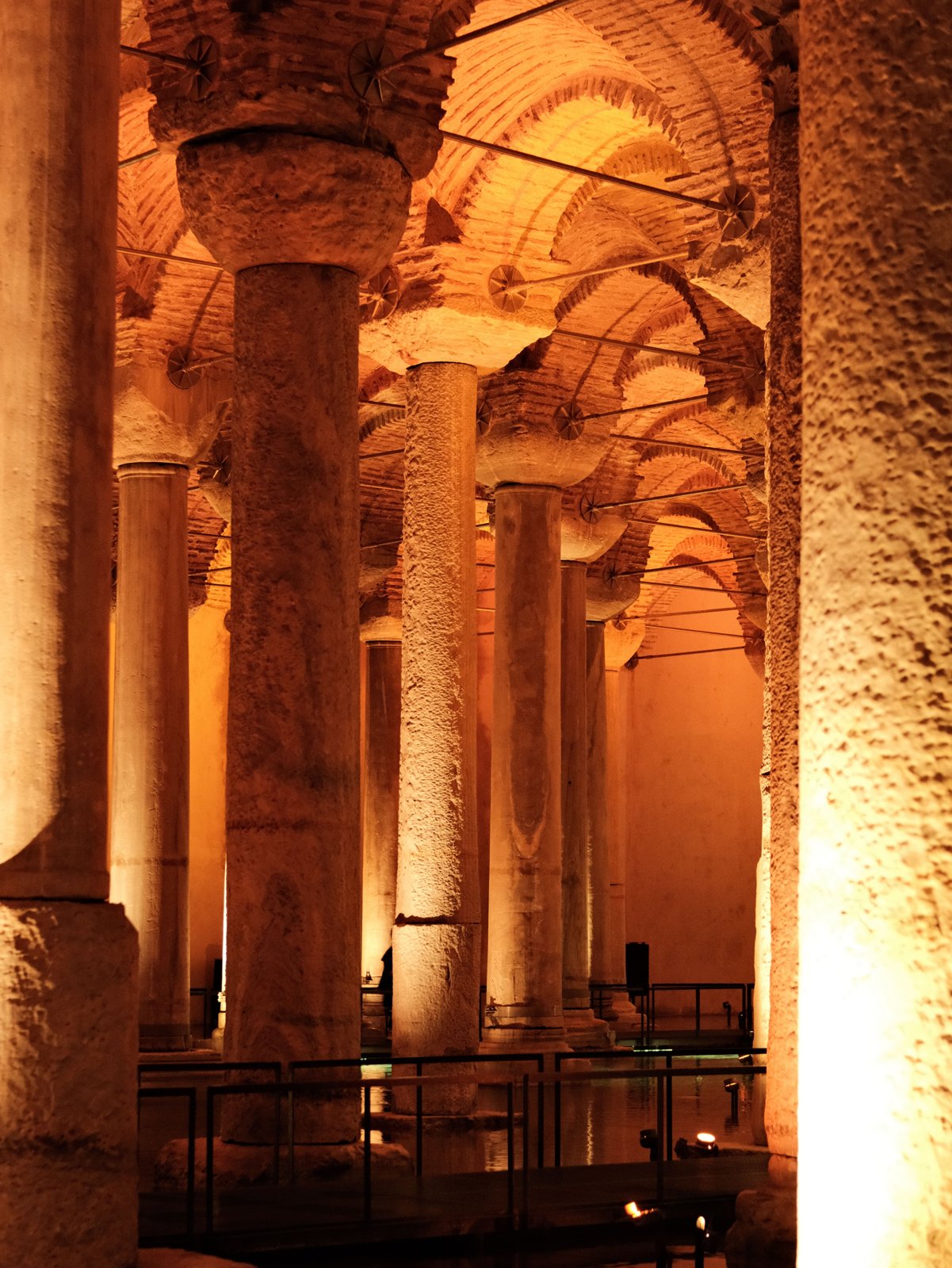
A cistern, in this context, is simply a large covered tank built to store water collected from rain or aqueducts for later use. The Basilica Cistern’s roof is held up by 336 columns arranged in rows, many reused from older Roman buildings, which gives the space its cathedral like feel.
You can find full details, opening arrangements and nearby sights on the Basilica Cistern location page. The cistern sits a few minutes on foot from the Hippodrome, so most visitors combine the two on the same walk.
For current museum and monument arrangements across the country, Türkiye’s culture ministry publishes official updates at muze.gov.tr, which is a useful first check before any visit to a state run site.
What Is the Cistern of Theodosius (Şerefiye Sarnıcı)?
The Cistern of Theodosius, known locally as Şerefiye Sarnıcı, is a smaller fifth century Byzantine cistern reopened to the public with a modern light and sound presentation.
Daytime visits run between 09:00 and 18:00 and include a 360° projection mapping light show on the cistern walls. In the evening, the site runs a different programme: entrance is at 19:45, the mapping show begins at 20:15, and a whirling dervish performance with live Sufi music follows at 20:30, finishing around 21:15.
The evening session, which lasts about an hour and a half, includes snacks and drinks.
A few practical rules apply at this site. Luggage is not allowed inside, so leave bags at your hotel beforehand, and professional photography requires written permission arranged in advance.
We cover the history and layout of both cisterns in more depth in our earlier guide, Istanbul’s Şerefiye and Theodosius cisterns compared, which is worth reading if you want more background before you go.
How Were Istanbul’s Cisterns Originally Used?
Istanbul’s cisterns were built to store water collected through aqueducts and channels, giving the Byzantine city a reserve supply during droughts or sieges.
Istanbul sits on a peninsula with limited natural freshwater, so Byzantine engineers built an extensive network of aqueducts bringing water in from forests well outside the city walls. Cisterns like the Basilica Cistern and the Cistern of Theodosius acted as underground tanks at the end of that network, holding water close to the palaces and public buildings that needed it.
Many of the columns inside these cisterns were salvaged from earlier Roman temples and monuments, which is why you will spot mismatched capitals and even an upside down Medusa head carving inside the Basilica Cistern.
The practice of reusing older stonework was common throughout the Istanbul region during this period, and you will see it again in walls and foundations across the old city.
Smaller and Lesser Known Cisterns
Beyond the two main visitor sites, Istanbul has other Byzantine cisterns, but most are not set up for ticketed public access in the same way.
Some smaller cisterns have been converted into cafés, exhibition halls or event spaces, which means opening hours and access rules change with whatever business currently occupies the space. Others remain closed to the public entirely, visible only through grated windows at street level around the old city.
If you are exploring on foot, keep an eye out near the Grand Bazaar and the surrounding backstreets, where several of these smaller structures survive. They are a reminder of how extensive the underground water network once was, even if most of it is no longer open for a formal visit.
How Do Istanbul’s Cisterns Compare to Cappadocia’s Underground Cities?
Istanbul’s cisterns were built to hold water, while Cappadocia’s underground cities were carved for shelter, so the two are different in purpose despite both being underground.
An underground city, in the Cappadocia sense, is a network of tunnels and rooms cut into soft volcanic rock, used historically as refuge during conflict and as storage for food and livestock. Derinkuyu Underground City and Kaymaklı Underground City are the best known examples and sit a day’s travel from Istanbul.
If your trip covers both regions, it is worth seeing one cistern in Istanbul and one underground city in Cappadocia, since the contrast between the two kinds of engineering is part of what makes each one interesting.
Getting There and Practical Tips
Both main cisterns are reached from the Sultanahmet stop on the T1 tram line, with the Basilica Cistern a two minute walk and the Cistern of Theodosius a similarly short walk from the same stop.
Wear comfortable shoes with grip, since the walkways inside both cisterns can be damp and slightly uneven. There is no particular dress code for either site, unlike at active mosques nearby, but modest clothing is sensible if you plan to visit the Hippodrome area’s mosques on the same day.
An Istanbulkart, the city’s rechargeable transport card, covers trams, metro and ferries across the city and is worth picking up on arrival. You can check current transport network maps and card top-up points at istanbulkart.istanbul before you set out.
As of October 2026, booking the Cistern of Theodosius evening dervish performance ahead is the main thing worth arranging in advance, since it runs at a fixed time each evening and space in the small venue is limited.
Frequently Asked Questions
Is the Basilica Cistern worth visiting?
Yes, for most first time visitors to Istanbul it is a straightforward add on to a Sultanahmet morning, taking well under an hour and sitting close to the Hippodrome.
Can you visit both cisterns in one day?
Yes, both the Basilica Cistern and the Cistern of Theodosius sit a short walk apart near Sultanahmet, so seeing both in a single afternoon is easy to plan.
Do you need to book ahead for the cisterns?
Only for the Cistern of Theodosius evening dervish performance, which runs at a fixed time and has limited seating; daytime sessions are more flexible.
Is there a dress code for Istanbul’s cisterns?
No. Neither cistern enforces a mosque style dress code, though sturdy, non slip shoes are worth wearing because the walkways can be damp.
How do you get to the cisterns by public transport?
About a two minute walk from the Sultanahmet stop on the T1 tram line gets you to either cistern, making them easy to reach without a car or taxi.
Are Istanbul’s cisterns the same as Cappadocia’s underground cities?
No. Istanbul’s cisterns stored water for the Byzantine city, while Cappadocia’s underground cities, such as Derinkuyu and Kaymaklı, were carved as shelter and storage space.
If an evening visit with the Sufi music and dervish performance appeals, you can check current sessions and reserve a place directly through the Cistern of Theodosius evening programme, which is the practical way to lock in a fixed time slot before your trip.

Comment (0)