

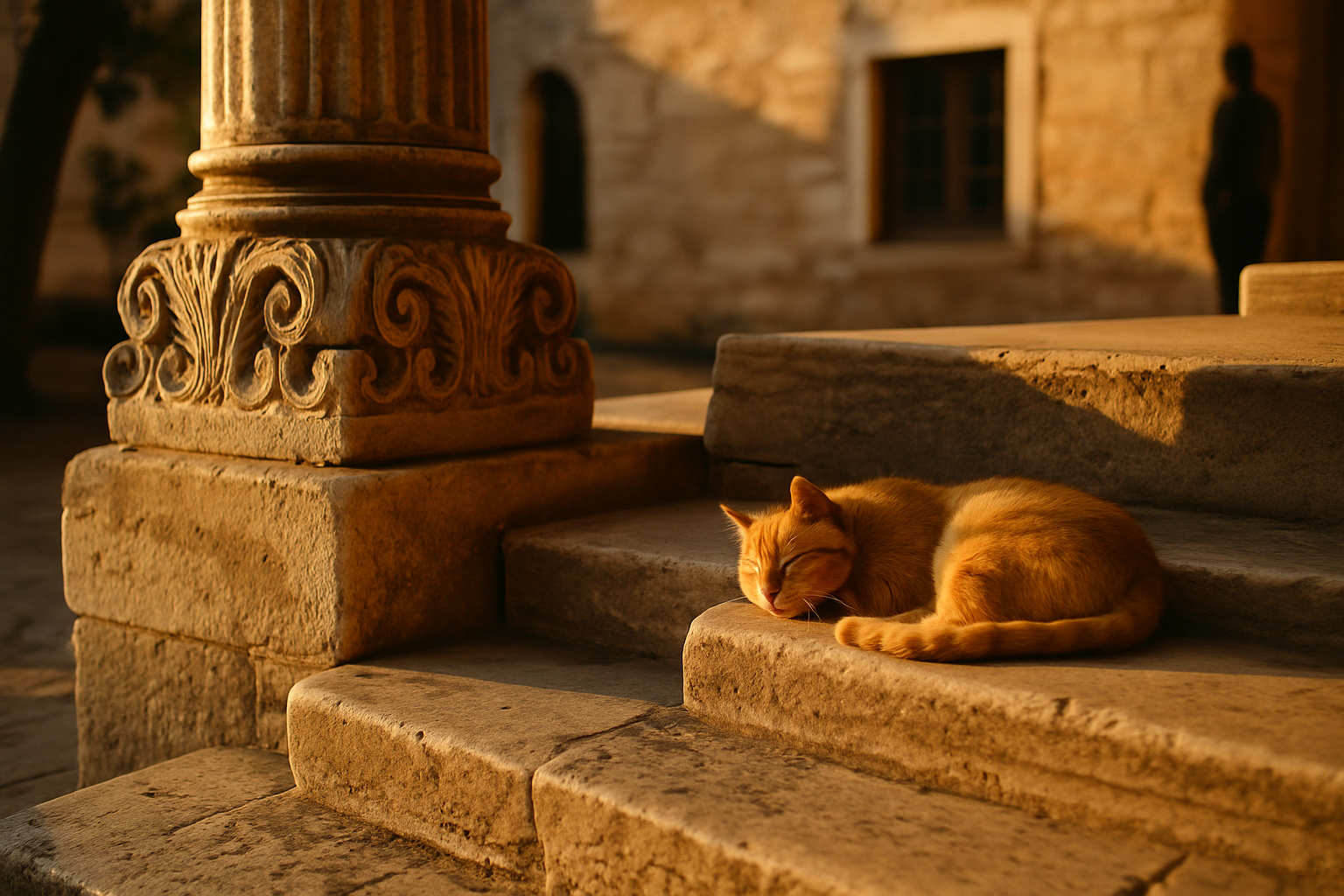
Beyond the Basilica Cistern, the two names visitors keep hearing (Şerefiye Sarnıcı and the Cistern of Theodosius) actually refer to the same fifth-century underground reservoir near Sultanahmet Square. Among Istanbul’s cisterns it is the one that trades the famous wading walkway for restored stonework, a projection-mapping show and, on some evenings, a live whirling dervish performance.
As of September 2026 it runs as a single ticketed site with a daytime session and a separate evening programme.
- Time needed: about 45 minutes for the daytime session; the evening dervish programme is a fixed 1.5 hours, from 7:45 pm entry to a 9:15 pm finish
- Closed days: none published by the operator; sessions run daily within a 9 am–6 pm daytime window, with the evening show as a separate booking
- Nearest tram: Sultanahmet stop on the T1 tram line, a short walk from the entrance near Sultanahmet Square
- Dress code: none required, the cistern is underground and unheated, so a light layer and flat, grippy shoes are more useful than any particular outfit
- What to book ahead: the evening dervish show, which runs at fixed times and has limited capacity; the daytime visit is more flexible within its opening window
- What not to bring: luggage is not allowed inside, and professional photography needs written permission in advance
Is Şerefiye Sarnıcı the Same Place as the Cistern of Theodosius?
Yes, Şerefiye Sarnıcı is the Turkish name and Cistern of Theodosius is the English name used by the operator for the same underground structure. Confusion happens because most English-language material defaults to “Cistern of Theodosius,” while Turkish signage, taxi drivers and older guidebooks use “Şerefiye Sarnıcı,” and the two rarely appear side by side.
Both names point to a single cistern a short walk from Sultanahmet Square, distinct from the much larger and more visited Basilica Cistern nearby.
The site’s own booking pages list it under the Cistern of Theodosius name, with Şerefiye Sarnıcı given as the Turkish equivalent, which is the clearest confirmation that travellers are looking at one place rather than two separate attractions.
If an itinerary or a driver mentions both names in the same breath, it is not a mistake, it is simply two languages describing the same underground chamber.
History and Architecture of the Cistern
The cistern dates to the reign of Emperor Theodosius II in the fifth century, built as part of Constantinople’s network of underground water storage that also produced the Basilica Cistern.
Water arrived through the city’s aqueduct system and was held here for use during sieges or dry spells, a practical necessity for a city built on a peninsula with limited natural freshwater. The chamber’s rows of columns and brick vaulting are original Byzantine construction, restored rather than rebuilt, which is why the stone still shows centuries of wear.
Rediscovered and later restored, the cistern is smaller and more intimate than its famous neighbour, which makes it easier to see in full without the queues that build up at more heavily visited underground sites.
The restoration added a 360° projection mapping system that now plays across the vaulted ceiling and walls, layering modern light design onto a genuinely ancient space. Two shows currently run on rotation, titled “From Past to Present” and “Istanbul: City of Water Civilization,” both built around the site’s history rather than generic visuals.
What Does the Daytime Visit Include?
The daytime visit is a single ticket that covers entry for a chosen session between 9 am and 6 pm, plus the mapping light show projected onto the cistern’s interior. Visitors move through at their own pace rather than following a guided group, so the 45 minutes or so it takes most people is flexible in either direction.
The mapping show plays on a loop through the day, so there is no need to time an arrival around a specific screening.
Because the daytime session has no fixed start time within its opening window, it suits travellers building a loose itinerary around nearby sights such as the Hippodrome Istanbul or the covered lanes of the Grand Bazaar Istanbul.
Anyone following a structured single-day route, such as the one laid out in this site’s one-day Istanbul itinerary for first-time visitors, can slot the cistern in as a cool, quiet break between more crowded stops without worrying about missing a fixed session time.
What Happens at the Evening Dervish Show?
The evening programme is a separate, timed ticket built around a live performance rather than a self-guided walk. Doors for entrance open at 7:45 pm, the mapping light show plays from 8:15 pm, and the whirling dervish performance with live Sufi music begins at 8:30 pm, with the whole event finishing at 9:15 pm.
The ticket includes snacks and drinks served during the evening, on top of the mapping show and the performance itself.
A dervish performance is a form of Sufi devotional ceremony in which performers turn in slow, sustained circles as a meditative practice, traditionally accompanied by live instrumental music.
Seeing it inside a fifth-century water cistern, lit by projection mapping rather than daylight, gives the evening a different atmosphere from the daytime visit, closer to a small performance than a historical walk-through.
Because capacity is limited and the timing is fixed, this is the version of the visit that benefits most from booking ahead rather than turning up on the day.
How Do You Get to Şerefiye Sarnıcı?
The cistern sits within easy walking distance of Sultanahmet Square, in the same historic peninsula as most of Istanbul’s best-known Byzantine and Ottoman sites. The nearest tram stop is Sultanahmet on the T1 line, which also serves the Hagia Sophia, Blue Mosque and Topkapı Palace area, making it simple to combine with a longer walk through the old city.
Travellers arriving from the newer parts of town, including Beyoglu District or Galata, can take the T1 tram directly across the Galata Bridge to Sultanahmet.
For current tram routes, service frequency and any planned works on the T1 line, the official operator’s site is the most reliable reference, since schedules do occasionally shift: Istanbul’s metro and tram network information.
An Istanbulkart, the rechargeable travel card used across the city’s trams, metro and ferries, is worth having before this kind of sightseeing day, and details on where to buy and top it up are available through Istanbul’s official transport card site.
Rules to Know Before You Go
The cistern has a short list of practical rules that are easy to miss until arrival. Luggage, including large backpacks and wheeled suitcases, is not permitted inside, which matters for anyone visiting straight from the airport or before a late checkout.
Professional photography (meaning tripods, external flashes or commercial shoots) requires written permission arranged in advance rather than something sorted at the door.
None of this makes the site difficult to visit; it simply rewards a small amount of planning. Comfortable, non-slip shoes are more useful than any formal dress code, since the stone floors can be uneven and slightly damp given the site’s original function as a water reservoir.
Travellers combining this stop with a longer day on the peninsula, as outlined in this site’s two-day Istanbul itinerary, will find it easiest to fit in either early in the day or as an evening booking rather than squeezed between other timed tickets.
How Does Şerefiye Compare With the Basilica Cistern and Other Underground Sites?
The Basilica Cistern is larger, more heavily visited, and known for its two carved Medusa head column bases, while Şerefiye Sarnıcı is smaller, quieter and built around a modern light and performance programme rather than a raised wooden walkway.
Both are genuine Byzantine cisterns from the same broad era of underground water storage, so the choice between them is less about historical importance and more about pace and crowd tolerance. Visitors short on time in Istanbul sometimes choose one over the other rather than both, and Şerefiye’s smaller footprint makes it the faster of the two to see properly.
For a wider view of how Byzantine and Ottoman heritage sites are managed and ticketed across the country, Türkiye’s cultural and museum authorities publish general visitor information that is worth a look before a first trip: Türkiye’s official tourism portal.
Anyone planning to see several underground and historical sites on the same peninsula day will get more out of each one by spacing them rather than rushing between all of them back to back.
Frequently Asked Questions
Is Şerefiye Sarnıcı worth visiting if I’ve already seen the Basilica Cistern?
Yes, but treat it as a different kind of visit rather than a repeat, the scale is smaller and the evening dervish programme in particular offers something the Basilica Cistern does not.
How long does the daytime visit take?
About 45 minutes, moving at your own pace through the cistern and its mapping light show.
Do I need to book the evening dervish show in advance?
Yes, since it runs at a fixed time with limited capacity, unlike the more flexible daytime session.
Can I bring a suitcase or large backpack inside?
No, luggage is not permitted inside the cistern, so plan to visit before checking bags at a hotel or storage point.
Is the cistern accessible by tram?
Yes, the Sultanahmet stop on the T1 tram line is the nearest stop, within easy walking distance of the entrance.
Are Şerefiye Sarnıcı and the Cistern of Theodosius two different tickets?
No, they are the same site under two names, so one booking covers the place regardless of which name you saw first.
For anyone weighing up which cistern to prioritise on a first trip, booking directly through the operator’s own pages is the simplest way to see current session times for both the daytime visit and the evening dervish show: Cistern of Theodosius official booking site.
It remains one of the more atmospheric ways to spend an hour or two among Istanbul’s cisterns, particularly for travellers who want history paired with something happening in front of them rather than a quiet walk-through alone.
Frequently asked questions
How many ancient cisterns can you visit in Istanbul?
Several of the Byzantine cisterns beneath the historic peninsula have been restored and opened. The Basilica Cistern is the largest and most famous, while the Şerefiye Cistern and the Cistern of Theodosius are smaller, quieter and far easier to see without queuing.
What is the difference between the Basilica Cistern and the Şerefiye Cistern?
The Basilica Cistern is vast, dimly lit and usually crowded, with hundreds of columns and the well-known Medusa heads. The Şerefiye Cistern is a fourth-century structure on a much more intimate scale, with better lighting and room to move, and it is often used for exhibitions and projections.
Why did Istanbul need underground cisterns?
Constantinople had almost no natural fresh water inside its walls, so water was carried in by aqueduct from the forests to the north-west and stored underground against sieges and droughts. The cisterns are the storage end of one of the most ambitious water systems of the ancient world.
Are the cisterns suitable for children or people with mobility difficulties?
The interiors are cool, damp and dimly lit, with steps down from street level and walkways that can be slippery. Children generally enjoy them, but anyone with mobility difficulties should check access arrangements at the specific cistern before visiting, as they differ from one to another.
How long does it take to visit a cistern in Istanbul?
Thirty to forty five minutes is usually enough for one of the smaller cisterns, and around an hour for the Basilica Cistern if it is busy. Because they are close together in the old city, it is easy to see two in one morning.

Comment (0)