

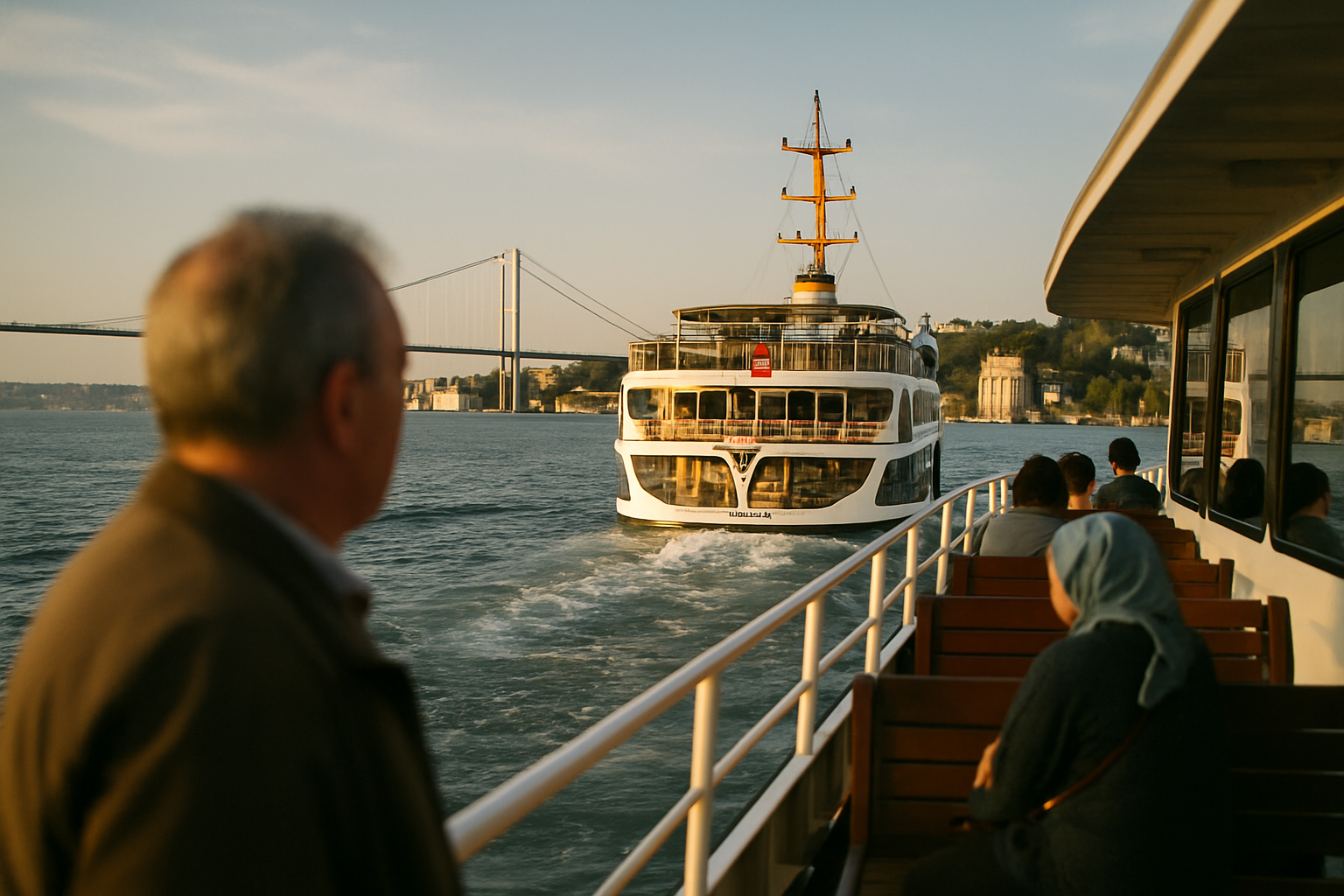
A Bosphorus boat tour takes you along the strait dividing Europe and Asia, passing Ottoman palaces, fortresses, waterfront mansions and both suspension bridges, usually in around two hours for a standard sightseeing route.
Which landmarks you see, and how long you spend on the water, depends on whether you choose a short daytime cruise, a sunset sailing or an evening dinner cruise. This guide covers the main routes running as of September 2026 and what each one actually shows you.
What Do You See on a Bosphorus Boat Tour?
| Option | Duration |
|---|---|
| Bosphorus day sightseeing cruise | 2 hours |
| Bosphorus sunset cruise | 2 hours |
| Bosphorus dinner cruise with Turkish show | 3 hours |
| Private yacht charter | – |
| Event boat charter | – |
A Bosphorus boat tour shows you a working strait rather than a static view: fishing boats, container ships heading to the Black Sea, and ferries crossing between continents share the water with the tour boats.
The Bosphorus is a natural strait that separates the European and Asian sides of Istanbul and connects the Sea of Marmara to the Black Sea, and most of the city’s shoreline landmarks sit directly on its banks.
On a standard route you pass at least one of the two suspension bridges, several Ottoman-era palaces built for sea access, and at least one fortress built to control the strait militarily.
Away from the grand buildings, the boat also passes rows of yalı, the wooden waterside mansions built by Ottoman elites from the eighteenth century onward as summer residences. Many of these are still privately owned and lived in, which is part of why they look preserved rather than turned into museums.
Guides on audio-guided routes usually point them out by name as the boat passes, along with the smaller mosques and clock towers that mark old ferry stops along both shores.
Essentials: Timing, Piers and What to Book Ahead
Most sightseeing cruises run to a fixed timetable rather than on demand, so timing your visit around a departure matters more than picking a specific day. A standard daytime sightseeing cruise runs for about two hours, according to the operator’s own booking pages.
Sunset cruises depart later, with the time shifting through the year as daylight changes, and evening dinner cruises leave from Kabataş Port after dark. Sailings can be cancelled or delayed in strong wind or storms, which is worth checking the morning of your trip rather than assuming the schedule is fixed.
The main departure points sit close to public transport. Eminönü pier is a short walk from the Eminönü tram stop on the T1 line, and Karaköy pier is close to both the Karaköy tram stop and the Tünel funicular station, so neither requires more than a five-to-ten-minute walk from public transport.
Kabataş, used for evening dinner cruises, sits at the end of the T1 tram line and is also the lower station of the funicular up to Taksim. There is no particular dress code for daytime sightseeing routes, but evening cruises with a show or set menu tend to lean smart-casual rather than beachwear.
What needs booking ahead varies by season. In July and August, and around public holidays, sunset and dinner cruises can fill their departures, so booking a few days ahead is sensible rather than turning up at the pier.
Public ferries run by Istanbul’s municipal operator do not require advance booking and follow published timetables, which you can check directly on the Şehir Hatları ferry timetable before deciding whether a scheduled ferry or a dedicated tour suits your day better.
Which Landmarks Line the European Shore?
The European shore carries most of the well-known Ottoman and Byzantine landmarks, because the old imperial city grew up on this side of the strait. Leaving from Eminönü or Karaköy, boats pass Dolmabahçe Palace, a nineteenth-century imperial residence built directly on the waterfront with a marble façade visible from the water.
Further along sits Rumeli Fortress, built by Sultan Mehmed II in 1452 to control the narrowest point of the strait ahead of the conquest of Constantinople, a fortress in the strict sense: a defensive structure with towers and walls rather than a palace.
Beyond it, the shoreline opens into wealthier waterside districts such as Bebek and Emirgan, known for their yalı and for having some of the calmest water on the whole route.
- Dolmabahçe Palace, nineteenth-century imperial palace directly on the water
- Ortaköy Mosque, Baroque-style mosque beside the first Bosphorus Bridge
- Rumeli Fortress, fifteenth-century fortress controlling the narrow strait
- Bebek and Emirgan, waterside districts with preserved Ottoman-era mansions
- Sarıyer, the northern turning point on longer routes, near the Black Sea mouth
Closer to the first bridge, Ortaköy Mosque sits almost under the span itself, a small Baroque-style mosque that has become one of the most photographed points on any Bosphorus boat tour precisely because the bridge frames it from the water.
Depending on how far north a particular route goes, the boat may turn back around Sarıyer, near where the strait widens toward the Black Sea, or further south for a shorter loop. Anyone weighing this route against the alternative on the other side of the city can read our comparison of Bosphorus and Golden Horn cruise routes before choosing.
Which Landmarks Line the Asian Shore?
The Asian shore is quieter and greener than the European side, with fewer imperial monuments but more residential waterfront and open parkland. Boats typically cross to this side at least once during a standard route, passing Beylerbeyi Palace, a smaller nineteenth-century summer palace built as a guesthouse for visiting heads of state.
Further along, the district of Kuzguncuk shows a mix of wooden houses, churches, synagogues and mosques standing close together, a visible reminder of the mixed communities that lived along this stretch of coast. Çengelköy and Kandilli follow, both known locally for their tea gardens right on the water rather than for any single monument.
Because the Asian shore has less shipping traffic near the coast, boats often run closer to the bank here than on the European side, which makes it easier to see architectural detail on the yalı up close.
This side of the strait also gives the clearest view back across to the European skyline, including the Topkapı Palace headland and the domes of the old city, which is why many operators time the return leg of a sunset cruise to cross here as the light changes.
Travellers researching the wider area beyond the boat itself can find background on the whole strait on the site’s Bosphorus location page, which covers the neighbourhoods on both shores in more detail.
Sightseeing, Sunset or Dinner: Which Route Fits Your Evening?
The right route depends mainly on how much time you have and what kind of evening you want, not on which one shows “more” of the strait, since the landmarks are largely the same.
A daytime sightseeing cruise, running about two hours with an on-board audio guide, is the most straightforward way to see the palaces, fortress and bridges in daylight.
A sunset cruise covers similar ground but times the return leg to catch the light changing over the water, running about two hours with a live English-speaking guide, a welcome drink and snacks included, according to the operator’s site.
A dinner cruise is a different kind of evening rather than a longer version of the same trip: leaving from Kabataş Port, it runs for about three hours with a set menu, a live show and a DJ, and the operator sells separate packages for guests who meet the boat at the pier and for those who want a hotel transfer.
Anyone deciding between a straightforward sightseeing pass and an evening with dinner and entertainment can compare the details in our guide to planning a Bosphorus dinner cruise evening, and read what a later sailing typically covers in our note on what a Bosphorus night cruise includes.
For a wider view of every boat option running on the water in Istanbul, including public ferries and private charters, the roundup of boat trips and cruises in Istanbul is a useful starting point before booking anything.
Golden Horn Extension for a Longer Route
The Golden Horn is a separate waterway from the main strait, a natural inlet that curves into the European side of the city and was historically used as the city’s sheltered harbour.
A Bosphorus boat tour does not normally enter it, so travellers who want to see both the strait and this inlet need to book them as two distinct trips rather than expecting one boat to cover both.
A dedicated Golden Horn sightseeing cruise runs for about two and a half hours, stopping for around ninety minutes at Miniatürk on the outbound leg before returning along the opposite shore past Eyüpsultan Mosque and the Fener Patriarchate, according to the operator’s own booking page.
Because the two routes leave from piers close to each other at Eminönü and Karaköy, it is possible to do a Bosphorus sightseeing cruise and a Golden Horn cruise on the same day without much extra travel between them, though the total time commitment runs to roughly four to five hours across both trips.
Anyone planning to combine the two should read the full breakdown in our Golden Horn boat tour guide, which covers the stops, the turning point at Miniatürk and what is and is not included in the ticket price.
General planning information on ferries, museums and public holidays across the country is also available through Türkiye’s official tourism portal, which is worth checking if your trip includes other cities beyond Istanbul.
Frequently Asked Questions
How long does a standard Bosphorus boat tour take?
About two hours for a daytime sightseeing cruise; sunset cruises run a similar length, and dinner cruises extend to roughly three hours including the meal and show.
Do I need to book a Bosphorus boat tour in advance?
Only in peak season. In July and August, and around holidays, booking a few days ahead for sunset or dinner cruises is sensible, while public ferries run on fixed timetables without advance booking.
Which shore has better views, European or Asian?
Neither is clearly better; the European shore carries most of the palaces and the fortress, while the Asian shore is quieter and gives the clearest view back across to the old city skyline.
Can I combine a Bosphorus cruise with a Golden Horn cruise?
Yes, but they are two separate trips departing from nearby piers, since the Golden Horn cruise does not enter the main strait and vice versa.
Is there a dress code for a Bosphorus dinner cruise?
No strict dress code exists, though smart-casual is typical for evening cruises with a set menu and show, while daytime sightseeing trips have no particular requirement.
What happens if a cruise is cancelled for weather?
Operators generally reschedule or refund affected sailings, so checking conditions and your operator’s cancellation policy on the morning of departure is worth doing before you head to the pier.
If you want to see these landmarks without juggling timetables or working out which pier to use, Bosphorus Cruise runs daytime, sunset and dinner routes from central piers with fixed departure times, which is the simplest way to fit a Bosphorus boat tour into a short Istanbul itinerary.

Comment (0)