
Types of Boat Trips and Cruises in Istanbul
Boat trips in Istanbul explained: Bosphorus cruises, Golden Horn tours, sunset and dinner cruises, public ferries and private charters, and who each suits.

On this page
- What Types of Boat Trips Are Available in Istanbul?
- Bosphorus Sightseeing Cruises
- How Does the Golden Horn Cruise Differ from a Bosphorus Cruise?
- What’s the Difference Between a Sunset Cruise and a Dinner Cruise?
- Are Public Ferries a Good Alternative to Tourist Cruises?
- Private Yacht and Event Charters
- What Should You Book in Advance?
- What’s the Best Time of Day to Go?
- Departure Piers and Getting There
- Which Landmarks Line the European Shore?
- Which Landmarks Line the Asian Shore?
- What Should You Bring?
- Frequently Asked Questions
Istanbul offers five practical types of boat trip: short Bosphorus sightseeing cruises, dedicated Golden Horn tours, evening sunset or dinner cruises, ordinary public ferries, and private charters. Which one suits you depends on how much time you have and whether you want commentary on a fixed route or the freedom to plan your own.
As of September 2026, prices and departure times differ enough between them that it’s worth matching the trip to the day you actually have, not the one that sounds most romantic online.
What Types of Boat Trips Are Available in Istanbul?
Istanbul’s boat trips split into five categories that cover different stretches of water and different budgets of time. A Bosphorus sightseeing cruise is the shortest and most common option, running for around two hours between the European and Asian shores.
A Golden Horn cruise covers the narrower inland waterway instead, taking in a longer stretch of historic riverside districts in roughly two and a half hours.
Sunset and dinner cruises are evening versions of the same idea, built around a view rather than a checklist of sights, while public ferries and private charters sit at opposite ends of the spectrum, one is the cheapest way to cross the water, the other the most flexible.
- Bosphorus sightseeing cruise, around 2 hours, daytime departures
- Golden Horn cruise, around 2.5 hours, three sailings a day
- Sunset or dinner cruise, 2 to 3 hours, evening only
- Public ferry (Şehir Hatları), point-to-point, no guide, runs all day
- Private yacht or event charter, by the hour, your own route and timing
None of these need booking weeks ahead outside the busiest summer weekends, but dinner cruises and private charters do fill their limited slots faster than a daytime sightseeing boat.
If you’re building a first visit around the water, it also helps to read the wider picture of what else sits nearby, Istanbul’s full location guide covers the neighbourhoods most of these boats pass or depart from.
Bosphorus Sightseeing Cruises
A Bosphorus sightseeing cruise is a short, guided run along the strait that separates Europe from Asia, usually lasting about two hours.
The Bosphorus itself is the waterway connecting the Black Sea to the Sea of Marmara, and it runs directly through the middle of the city, which is why almost every version of this trip passes the same run of waterfront palaces, fortresses and bridges regardless of operator.
One version of this cruise, offered by Bosphorus Cruise, runs in the afternoon with an on-board audio guide included, though meals and hotel transfers are not, according to the operator’s own booking pages.
These cruises are the easiest boat trip to slot into a single day in the city, since they don’t require a full evening and don’t depend on weather in the way a sunset sailing does.
Boarding points sit close to the old commercial waterfront near the Spice Bazaar in Eminönü, an easy add-on if you’re already spending the morning around the historic peninsula. Expect an open deck for photographs and a running commentary on the buildings you pass, rather than any stops to get off and explore.
If you only have time for one boat trip in Istanbul, this is the one most people mean when they ask about it.
Tours we recommend in Istanbul
−5% Istambul readers save 5% on every tour below — applied at checkout.
Partner listings via GetYourGuide · free cancellation on most
How Does the Golden Horn Cruise Differ from a Bosphorus Cruise?
A Golden Horn cruise covers a different stretch of water and a different set of neighbourhoods to a standard Bosphorus sightseeing trip. The Golden Horn is a natural estuary that curves inland from the Bosphorus, separating the old walled city from the district of Beyoğlu and Galata, and it was historically the city’s working harbour rather than its grand waterfront.
One operator’s Golden Horn Sightseeing Cruise runs for around 150 minutes and departs several times a day from Karaköy or Eminönü piers, according to the operator’s own listings.
The route sails out past around twenty landmarks on the way to a turning point near Miniatürk, where the boat pauses for roughly ninety minutes, then returns along the opposite bank past Balat, Fener and the Eyüpsultan Mosque before finishing back at Eminönü.
That return leg is what makes this trip worthwhile even for visitors who’ve already done a Bosphorus cruise, since it shows a quieter, more residential side of the city that the main strait doesn’t. Snacks and hot drinks are sold on board but aren’t included in the ticket price.
For a fuller breakdown of the stops and what each one is worth stopping to notice, see our detailed Golden Horn Boat Tour guide, and if you want to combine the trip with a walk around the district it borders, the historic Galata waterfront is a short walk from either boarding pier.
What’s the Difference Between a Sunset Cruise and a Dinner Cruise?
A sunset cruise is shorter and lighter than a dinner cruise, built around the view rather than a full meal.
Bosphorus Cruise’s sunset sailing runs for about two hours and includes a live English-speaking guide, a welcome drink and snacks rather than a sit-down dinner, according to the operator.
It suits couples or anyone who wants the golden-hour views over the water without committing an entire evening to the boat.
A dinner cruise is a longer, more structured evening, typically around three hours, boarding and departing from Kabataş Port.
One such cruise is sold at a base rate for guests who make their own way to the meeting point, with a hotel-transfer package costing more, according to the operator’s own pricing pages.
It includes a Bosphorus-view table, a live show and a DJ, with a choice of standard, vegetarian or VIP menu, though alcoholic drinks aren’t part of the soft-drink packages.
If an evening on the water matters more to you than seeing landmarks in daylight, this is the version to book, and both types generally allow free cancellation up to 24 hours before departure under the operator’s stated policy.
Are Public Ferries a Good Alternative to Tourist Cruises?
Yes, public ferries are a genuinely good alternative if your goal is simply to be on the water rather than to receive a guided tour.
Istanbul’s city ferries, run by Şehir Hatları, cross the Bosphorus and connect districts like Kadıköy on the Asian side with the European shore all day, at a fraction of the cost of a dedicated sightseeing cruise and without any commentary.
An istanbulkart is the rechargeable transport card used across the city’s buses, trams, metro lines and these ferries, and without one you’ll find it far harder to pay quickly at the turnstiles. Timetables and routes are published directly by the operator, so it’s worth checking the current schedule before you plan a crossing around one.
The trade-off is obvious: no audio guide, no fixed sightseeing route, and boats that are built for commuters rather than photographs, though the views of the water are the same either way.
This makes ferries a sensible choice if you’re already heading somewhere useful, such as crossing to the Kadıköy ferry terminal area for its food markets and streets, rather than boarding a boat purely for the sake of the trip.
For current timetables and ticketing rules, Istanbul’s public ferry operator, Şehir Hatları’s official ferry site, is the source to check, and Istanbulkart’s official top-up information is worth reading before your first ride if you haven’t used the card in the city before.
Private Yacht and Event Charters
A private charter gives you your own boat, route and timing instead of a shared schedule, and it’s the most flexible but also the most expensive way to see the water.
Private yacht charters through Bosphorus Cruise are priced by the hour with a two-hour minimum, using a fleet ranging between roughly 14 and 20 metres and carrying between six and fifteen guests, with a licensed captain and crew included but catering extra.
This suits small groups, proposals or families who want to set their own pace rather than follow a fixed commentary.
For larger gatherings, an event boat charter is a separate product built around bigger groups rather than couples or families. It is also booked by the hour with a two-hour minimum and can carry up to 700 guests according to the operator’s own listings, again with crew included and catering arranged separately.
Both charter types are booked directly with the operator rather than through a general booking platform, and both carry the same free-cancellation window of 24 hours before departure that applies across the operator’s other cruises.
What Should You Book in Advance?
Dinner cruises and private charters are the two boat trips worth booking ahead of time, since both work with limited seating or a single vessel rather than repeated daily sailings.
A dinner cruise’s menu choice and Bosphorus-view seating are allocated in advance, so booking a few days before your date, and earlier still in July and August, avoids being placed at a less favourable table.
Private and event charters depend on a specific boat being free at the hour you want it, which is a much narrower window than a scheduled sightseeing cruise with several sailings a day.
Daytime sightseeing cruises on the Bosphorus or Golden Horn are more forgiving, since they run multiple times daily and rarely sell out outside peak summer weekends. Public ferries need no booking at all beyond having a loaded istanbulkart ready at the turnstile.
If you’re travelling in high season, it’s still sensible to fix your evening cruise a few days ahead simply so it doesn’t compete with dinner plans elsewhere, and to double-check departure times close to your date, since summer and winter schedules can shift slightly.
What’s the Best Time of Day to Go?
Midday and late afternoon suit sightseeing best, because the light is even and both shores are clearly visible; a sunset departure suits anyone who wants the skyline lit orange rather than a straightforward daytime view.
Choosing between a midday and a late-afternoon sailing is mostly a choice between the flat midday light and the softer late-afternoon version of the same route. The operator’s sunset cruise includes a welcome drink and snacks alongside a live English-speaking guide, according to its own product page, and its departure time shifts with the season as daylight hours change.
Evenings bring a third option that isn’t really about the view at all. The Bosphorus Cruise dinner cruise with a Turkish show leaves from Kabataş Port after dark and runs for around three hours with a live show and DJ set included, though alcoholic drinks are not part of the soft-drink packages.
For a first visit, a midday or late-afternoon sightseeing cruise is usually the simplest way to get oriented before deciding whether a sunset or dinner cruise is worth adding on a later evening.
Departure Piers and Getting There
Most Bosphorus cruises depart from central piers such as Kabataş, Eminönü and Karaköy, all within easy reach of Istanbul’s tram network and main visitor areas.
Kabataş is the boarding point for the dinner cruise and is served by the T1 tram line, putting it within a short walk of Sultanahmet and the Old City for anyone staying nearby.
Eminönü and Karaköy, used for other Bosphorus and Golden Horn departures, sit right across the water from each other and are both reachable on foot from the Grand Bazaar area or by tram.
If you’d rather use the public ferry network alongside a private cruise, Istanbul’s public ferry operator publishes its own routes and timetables separately from the sightseeing operators. For wider trip planning, including entry requirements and general travel advice for Türkiye, Türkiye’s official tourism portal is a reliable starting point.
Arrive at least fifteen to twenty minutes before your departure time. Piers can be busy in the run-up to sunset departures, and boats generally leave on schedule rather than waiting for late arrivals.
Which Landmarks Line the European Shore?
The European shore carries most of the well-known Ottoman and Byzantine landmarks, because the old imperial city grew up on this side of the strait. Leaving from Eminönü or Karaköy, boats pass Dolmabahçe Palace, a nineteenth-century imperial residence built directly on the waterfront with a marble façade visible from the water.
Further along sits Rumeli Fortress, built by Sultan Mehmed II in 1452 to control the narrowest point of the strait ahead of the conquest of Constantinople, a fortress in the strict sense: a defensive structure with towers and walls rather than a palace.
Beyond it, the shoreline opens into wealthier waterside districts such as Bebek and Emirgan, known for their yalı and for having some of the calmest water on the whole route.
- Dolmabahçe Palace, nineteenth-century imperial palace directly on the water
- Ortaköy Mosque, Baroque-style mosque beside the first Bosphorus Bridge
- Rumeli Fortress, fifteenth-century fortress controlling the narrow strait
- Bebek and Emirgan, waterside districts with preserved Ottoman-era mansions
- Sarıyer, the northern turning point on longer routes, near the Black Sea mouth
Closer to the first bridge, Ortaköy Mosque sits almost under the span itself, a small Baroque-style mosque that has become one of the most photographed points on any Bosphorus boat tour precisely because the bridge frames it from the water.
Depending on how far north a particular route goes, the boat may turn back around Sarıyer, near where the strait widens toward the Black Sea, or further south for a shorter loop. Anyone weighing this route against the alternative on the other side of the city can read our comparison of Bosphorus and Golden Horn cruise routes before choosing.
Which Landmarks Line the Asian Shore?
The Asian shore is quieter and greener than the European side, with fewer imperial monuments but more residential waterfront and open parkland. Boats typically cross to this side at least once during a standard route, passing Beylerbeyi Palace, a smaller nineteenth-century summer palace built as a guesthouse for visiting heads of state.
Further along, the district of Kuzguncuk shows a mix of wooden houses, churches, synagogues and mosques standing close together, a visible reminder of the mixed communities that lived along this stretch of coast. Çengelköy and Kandilli follow, both known locally for their tea gardens right on the water rather than for any single monument.
Because the Asian shore has less shipping traffic near the coast, boats often run closer to the bank here than on the European side, which makes it easier to see architectural detail on the yalı up close.
This side of the strait also gives the clearest view back across to the European skyline, including the Topkapı Palace headland and the domes of the old city, which is why many operators time the return leg of a sunset cruise to cross here as the light changes.
Travellers researching the wider area beyond the boat itself can find background on the whole strait on the site’s Bosphorus location page, which covers the neighbourhoods on both shores in more detail.
What Should You Bring?
Bring layers for wind on the open deck, sun protection during the day, and a light jacket for evening cruises even in the warmer months.
- A light jacket or shawl, since the water is noticeably cooler than the streets even in summer
- Sunglasses and sunscreen for daytime and sunset departures
- A fully charged phone or camera, since most of the appeal is photographic
- Comfortable flat shoes, as decks can be narrow and sometimes slightly uneven
- Cash or a card for any drinks or snacks not included in your ticket
Nothing about a Bosphorus cruise requires formal dress. The dinner cruise leans smart casual given the live show and set menu, but there is no strict code enforced at boarding.
Planning your visit: see our guide to the Bosphorus Strait’s geography and history.
Frequently Asked Questions
How long does a typical Bosphorus sightseeing cruise last?
About two hours, covering the main waterfront landmarks between the European and Asian shores without any stops to disembark.
Do I need to book a boat trip in Istanbul in advance?
Only for dinner cruises and private charters, which have limited seating or a single vessel; scheduled daytime sightseeing cruises and public ferries rarely need advance booking.
Can I use public transport tickets on the ferries?
Yes, an istanbulkart works on Şehir Hatları public ferries the same way it does on buses, trams and the metro across the city.
Is a Golden Horn cruise worth doing alongside a Bosphorus cruise?
Yes, but they cover different water; a Golden Horn cruise shows Balat, Fener and Eyüp on the inland estuary, while a Bosphorus cruise covers the main strait.
Are private yacht charters only for special occasions?
No. They suit any group that wants its own timing and route, though the per-hour cost makes them better value for small groups rather than solo travellers.
What should I wear on a boat trip in Istanbul?
About the same as anywhere outdoors in the city; layers for evening cruises, since the water is noticeably cooler than the streets after sunset. Matching the boat to the day works better than picking the one with the best photos online: a sightseeing cruise for a single afternoon, a ferry for a practical crossing, and a sunset or dinner cruise when the evening itself is the plan.
Is a Bosphorus cruise suitable for children?
Yes. The open decks and calm strait waters make daytime sightseeing cruises straightforward for families, though supervision near railings is always sensible on any boat.
Which shore has better views, European or Asian?
Neither is clearly better; the European shore carries most of the palaces and the fortress, while the Asian shore is quieter and gives the clearest view back across to the old city skyline.
What happens if a cruise is cancelled for weather?
Operators generally reschedule or refund affected sailings, so checking conditions and your operator’s cancellation policy on the morning of departure is worth doing before you head to the pier.
Do Bosphorus cruises include meals?
No. The daytime sightseeing cruise excludes meals entirely, and the sunset cruise includes only a welcome drink and snacks. Only the dinner cruise, with its set menu options, includes a full meal.
Wherever your visit starts, it’s worth checking Türkiye’s official tourism portal, Türkiye’s official tourism portal, for any current entry or seasonal notes before you fix your dates.



Keep reading
All stories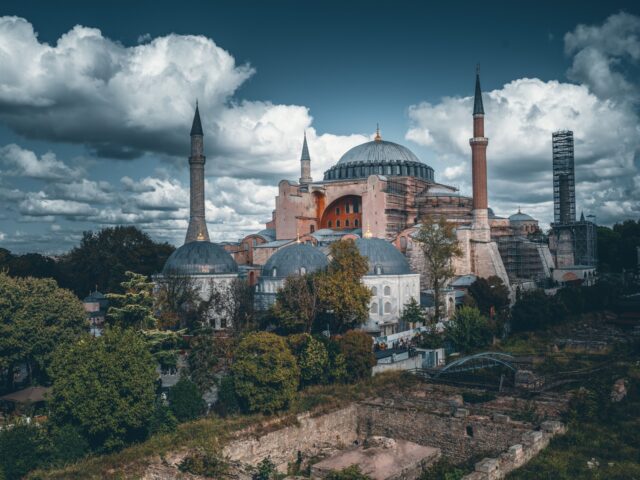
Hagia Sophia and Istanbul’s Historic Basilicas
A guide to Hagia Sophia and Istanbul's other historic basilicas: ages, opening rules, dress code, nearest tram stops…
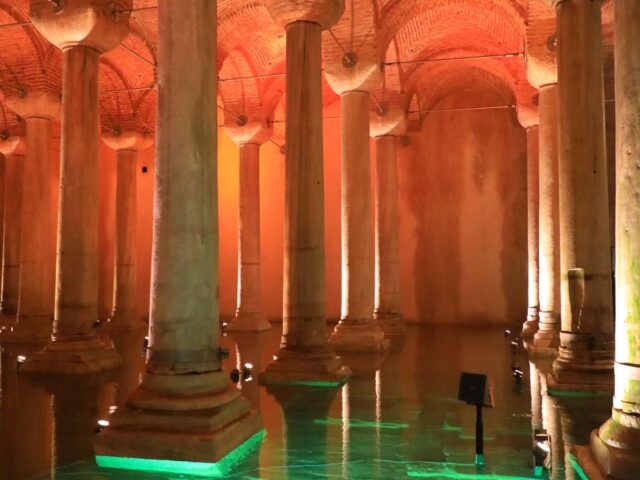
Underground Cisterns You Can Visit in Istanbul Today
Underground cisterns in Istanbul you can actually visit today: Basilica Cistern and Şerefiye, with hours, tickets and getting…
Basilica Cistern Tickets
Basilica Cistern tickets explained: how to book online, what entry includes, how to avoid the queue, and getting…
Our own Istanbul experiences
Run by the team behind Istambul · book direct

 Dinner, sunset and day cruises between Europe and Asia.See cruises bosporuscruise.com

 Historic Turkish baths in the old city — hand-picked hamams, booked direct.Book a hamam istanbulhamam.com

 Istanbul’s tallest viewpoint: both continents from 369 metres.Get tickets camlicatower.com

 Private Turkey tours with licensed guides, planned around your dates.Plan a trip turkeyitineraries.com


