Bosphorus Strait: Geography, History and Sights
What the Bosphorus Strait is, where Europe meets Asia, how it shaped Istanbul, and the best way to see it by cruise, bridge or ferry.
On this page
- What Is the Bosphorus Strait?
- Where Is the Boundary Between Europe and Asia?
- How Has the Bosphorus Strait Shaped Istanbul’s History?
- Best Ways to See the Bosphorus
- What Can You See Along the Shoreline?
- Bosphorus Bridges and Ferry Crossings
- When Is the Best Time to Visit the Bosphorus?
- Frequently Asked Questions
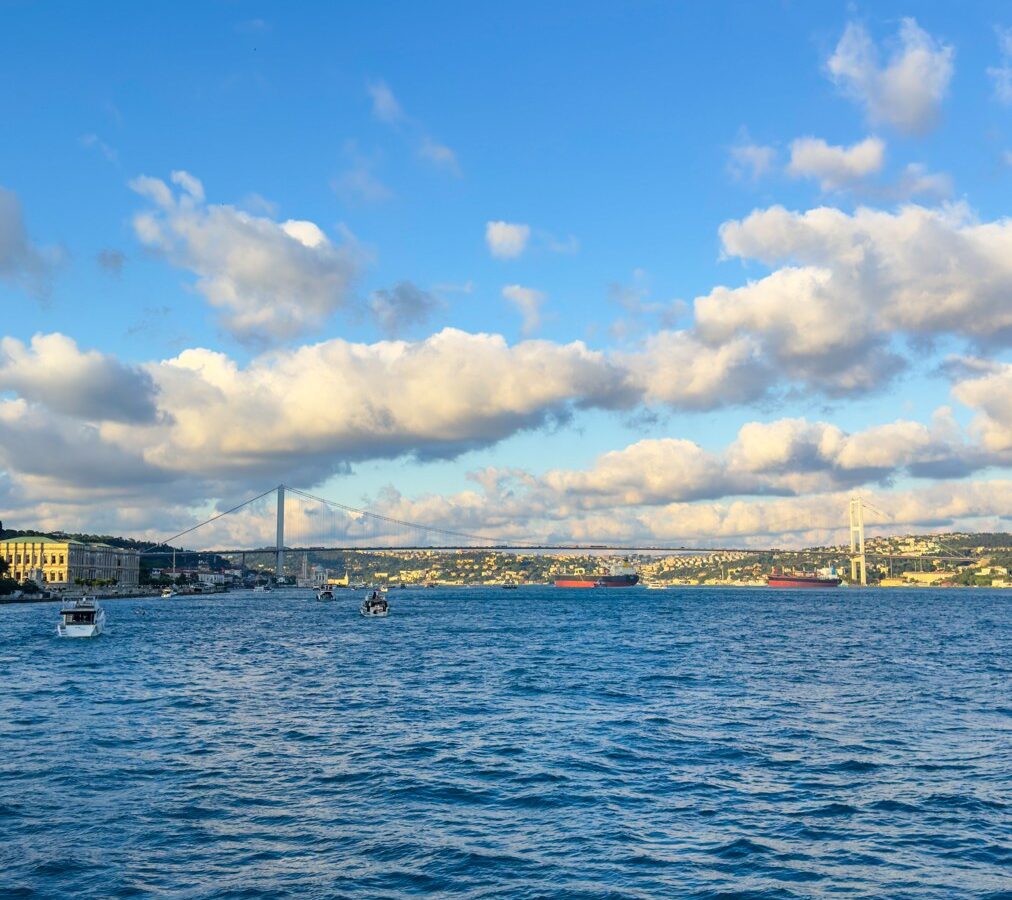
The Bosphorus Strait is the narrow waterway that separates Europe from Asia, linking the Black Sea to the Sea of Marmara and running directly through the middle of Istanbul. Ferries, bridges and sightseeing cruises cross it daily, and its shores hold palaces, fortresses and fishing villages on both continents.
- Location: divides Istanbul’s European and Asian sides, connecting the Black Sea to the Sea of Marmara
- Best way to see it: a short sightseeing cruise departing from Karaköy or Eminönü
- Nearest tram: the T1 line to Karaköy or Eminönü, both a short walk from the piers
- Booking ahead: advisable for sunset and dinner cruises, especially in the summer months
What Is the Bosphorus Strait?
| Option | Duration |
|---|---|
| Bosphorus day sightseeing cruise | 2 hours |
| Bosphorus sunset cruise | 2 hours |
| Bosphorus dinner cruise with Turkish show | 3 hours |
| Private yacht charter | – |
| Event boat charter | – |
The Bosphorus Strait is a natural waterway connecting the Black Sea to the Sea of Marmara, forming part of the geographic boundary between Europe and Asia.
A strait is a narrow passage of water joining two larger seas, and the Bosphorus is one of the busiest in the world. Cargo ships and tankers pass through it on their way between the Black Sea ports and the Mediterranean via the Dardanelles.
Istanbul is the only major city built across two continents, and the strait is the reason why. For a closer look at the waterway itself, including its shoreline neighbourhoods and viewpoints, our guide to the Bosphorus waterfront covers the area in more depth.
Where Is the Boundary Between Europe and Asia?
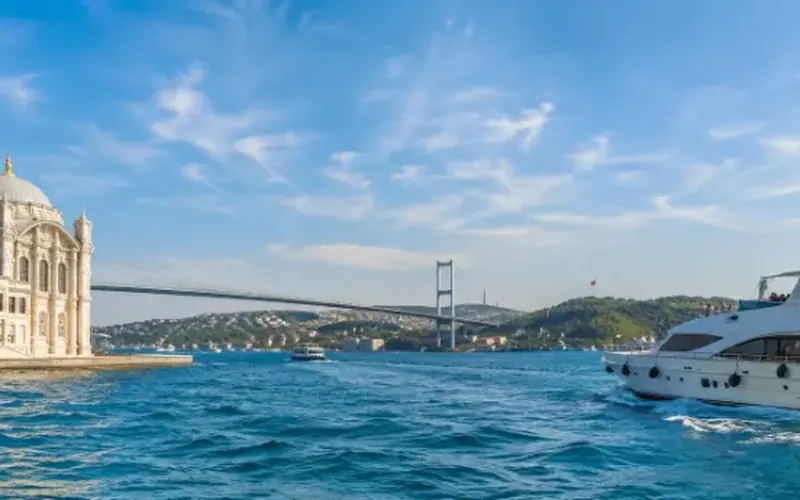
The boundary runs down the centre of the strait itself, with Istanbul’s historic peninsula and Beyoğlu on the European side and Üsküdar and Kadıköy on the Asian side.
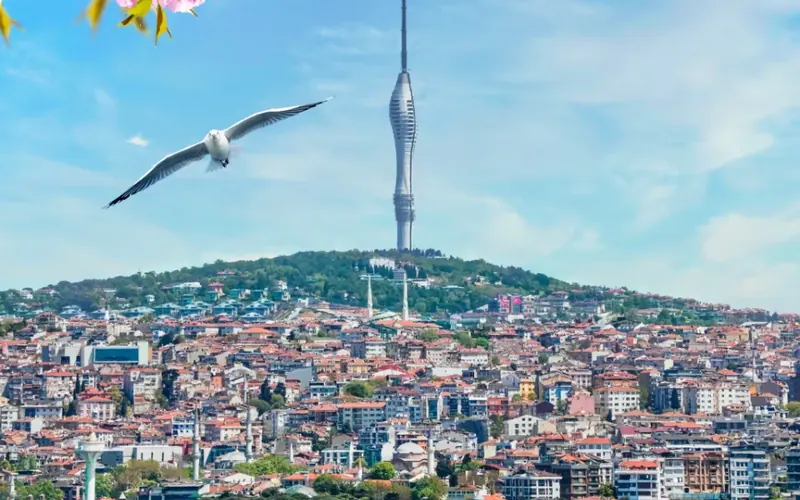
Most visitors spend their first days on the European side, where Sultanahmet, Topkapı Palace and the Grand Bazaar sit close together. The Asian side is quieter and more residential, with waterfront parks and tea gardens that fill up on weekend afternoons.
Crossing between the two is straightforward. The Marmaray rail tunnel runs beneath the strait, and several suspension bridges carry road traffic overhead, so travellers rarely think twice about which continent they are on.
Book it with us
Run by the team behind Istambul.

How Has the Bosphorus Strait Shaped Istanbul’s History?
The Bosphorus Strait shaped Istanbul’s history by making the city a trading crossroads between Europe and Asia for more than two thousand years.
Byzantine and later Ottoman rulers understood that whoever controlled the strait controlled trade routes between the Black Sea grain ports and the Mediterranean. Fortresses were built on both shores to enforce that control, including Rumeli Hisarı and Anadolu Hisarı. A hisarı is a fortress, and the name of each still marks which continent it defends.
Later, Ottoman sultans built waterfront palaces along the same shoreline, moving their court from the old walled city to Dolmabahçe Palace in the nineteenth century. The strait was no longer only a defensive line; it had become the city’s grandest address.
Best Ways to See the Bosphorus
The easiest way to see the Bosphorus is a short sightseeing cruise from the Karaköy or Eminönü piers, with public ferries as a cheaper alternative on the same route.
| Option | Typical duration | Good for |
|---|---|---|
| Public Şehir Hatları ferry | Varies by route | Independent travellers on a budget |
| Private day sightseeing cruise | About 2 hours | A fixed schedule with an audio guide and open deck |
| Sunset or dinner cruise | 2 to 3 hours | Evening views with a guide and a seated meal |
Bosphorus Cruise’s own day sightseeing tour runs for about two hours with an on-board audio guide, while its sunset cruise adds a live English-speaking guide and a welcome drink. Current fares are listed on the operator’s own booking pages.
For an evening with a full seated meal and live show, a Bosphorus dinner cruise is the option to look at; meeting at the pier costs less than a package that adds hotel transfer.
If you’re still deciding between operators, our comparison of Bosphorus and Golden Horn cruises sets out the routes side by side, and our notes on what’s included on a night cruise cover what to expect after dark. If dinner on the water is more your plan, see our piece on the evening cruise option with dinner included.
What Can You See Along the Shoreline?
Along the shoreline you’ll pass Ottoman palaces, wooden mansions, fortresses and parks, with a different view from each continent.
A yalı is a wooden waterfront mansion, and rows of them still line the shore at Bebek and Arnavutköy, many dating from the late Ottoman period. Further along, Dolmabahçe Palace and Beylerbeyi Palace show how the empire’s later sultans lived.
- Dolmabahçe Palace, the nineteenth-century palace on the European shore
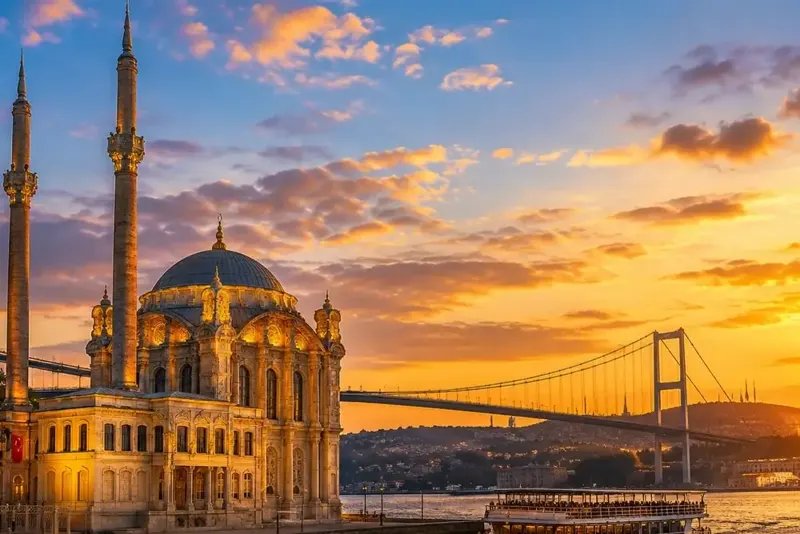
- Ortaköy Mosque, sitting directly under the first Bosphorus bridge
- Rumeli Hisarı, the fortress built to control strait traffic
- Maiden’s Tower, the small islet tower near Üsküdar
- Beylerbeyi Palace, the sultan’s summer residence on the Asian side
Our detailed Bosphorus sights guide breaks down which of these are worth stopping at on foot versus which are best seen from the water.
Bosphorus Bridges and Ferry Crossings
Three suspension bridges and a public ferry network link the European and Asian shores, alongside the Marmaray rail tunnel beneath the strait itself.
The 15 Temmuz Şehitler Köprüsü and Fatih Sultan Mehmet Köprüsü carry most city traffic, while the Yavuz Sultan Selim Köprüsü further north handles intercity routes. None of the three is designed for pedestrians, so crossing on foot isn’t an option.
Public ferries run by Istanbul’s public ferry operator connect piers on both shores throughout the day, and most locals pay with an Istanbulkart transport card, which also covers trams, the metro and buses. Visitors can buy one at a kiosk near most major piers.
When Is the Best Time to Visit the Bosphorus?
Late spring and early autumn give the clearest light and the mildest temperatures for a cruise, with fewer crowds than the peak of summer.
Summer evenings are popular for sunset and dinner cruises, so booking ahead matters most in July and August. Bosphorus Cruise’s sunset departure is timed around sunset in the summer season, and the dinner cruise boards in the evening at Kabataş Port.
Winter crossings are quieter and often cheaper, though open-deck viewing is less comfortable in the cold. Whatever the season, dress in layers, since the water adds a noticeable breeze even on a warm day.
For the basic geography, Encyclopaedia Britannica gives the strait’s length as about 30 km (19 miles), linking the Black Sea with the Sea of Marmara.
Frequently Asked Questions
How long does a Bosphorus cruise take?
About 2 hours for a standard day sightseeing cruise, with evening dinner cruises typically running closer to 3 hours.
Do I need to book Bosphorus cruise tickets in advance?
Yes, but it isn’t strict for the daytime cruise. Sunset and dinner departures fill up in summer, so booking a day or two ahead is worth it, and most operators offer free cancellation up to 24 hours before departure.
Which side of the Bosphorus is better, European or Asian?
Neither side is objectively better. The European side holds most of the historic sights and the Asian side offers a quieter, more residential feel, and a short ferry ride connects the two.
Can you swim in the Bosphorus?
No. The strait carries heavy shipping traffic and strong currents, so swimming along the main channel isn’t practical or advisable.
How do I get to the Bosphorus piers from Istanbul’s old city?
About a 10 to 15 minute tram ride. The T1 tram line runs to both Karaköy and Eminönü, and each pier is a short walk from its tram stop.
Is the Bosphorus the same as the Golden Horn?
No. The Golden Horn is a separate inlet that branches off the Bosphorus near the old city, with its own cruise route and a different set of landmarks along its banks.
Seeing the Bosphorus Strait from the water is the simplest way to understand why Istanbul sits where it does, and a short sightseeing cruise fits into almost any itinerary without eating up a whole day. If you’d rather book the crossing than plan it yourself, browse available Bosphorus cruise departures and pick a time that suits your trip.



Keep reading
All stories
Best Bosphorus Sunset Cruises
How a Bosphorus sunset cruise works: the route along the strait, what is usually included, where boats depart…
Bosphorus Dinner Cruise
A Bosphorus dinner cruise mixes dinner, live music and night views of Istanbul. Here's boarding time, pier, menu…
Bosphorus Ferry System
Istanbul's Bosphorus ferry system runs on two separate networks: public commuter boats operated by Şehir Hatları, and privately…
Our own Istanbul experiences
Run by the team behind Istambul · book direct