

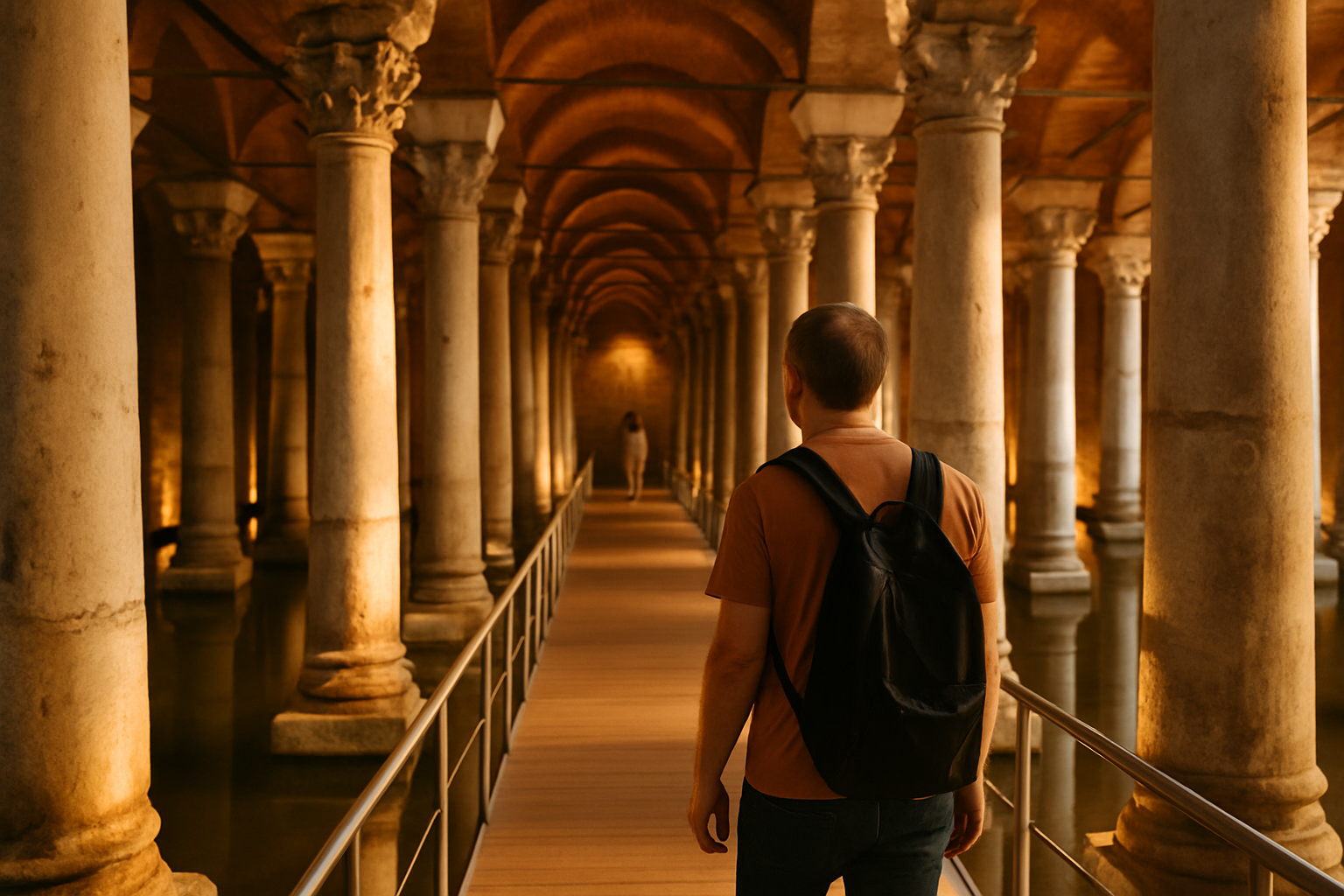
The Theodosius Cistern, known in Turkish as Şerefiye Sarnıcı, is a fifth-century underground water reservoir in Istanbul’s old city that now operates as a small museum with a projection mapping show. A daytime visit takes roughly 45 minutes, while the evening programme, which adds a whirling dervish performance, runs closer to an hour and a half. As of September 2026 the site publishes fixed session times rather than open-all-day access, so it pays to check the schedule before you set off.
- Time needed: about 45 minutes for the daytime session; around 90 minutes if you stay for the evening dervish show.
- Sessions: daytime visits run 09:00 to 18:00; the evening show has its own timed entrance later at night.
- Nearest transport: the T1 tram line’s Sultanahmet stop, a short walk through the old city.
- Dress code: none required — this is a secular archaeological site, not a mosque.
- Book ahead for: the evening dervish performance, which runs to a fixed timetable and has limited capacity.
What Is the Theodosius Cistern?
The Theodosius Cistern is a buried Byzantine water reservoir built during the reign of Emperor Theodosius II in the fifth century, designed to store water for the surrounding district of the old city. It sat forgotten and partly filled with rubble for centuries before restoration work uncovered its full scale and opened it to visitors as a heritage site. Rows of columns rise into a vaulted brick ceiling, and the space is now lit for atmosphere rather than left dark and damp as it once would have been.
Today the cistern functions as a small cultural venue rather than a simple archaeological stop. Visitors move through the chamber to a soundtrack of ambient music and a 360° projection mapping show cast across the walls and columns, telling the story of Istanbul’s relationship with water. If you want the fuller history of how this cistern and its more famous neighbour were built, rediscovered and restored, our earlier piece on Istanbul’s Şerefiye and Theodosius cisterns goes into that background in more depth. Underground water storage on this scale is not unique to Istanbul — Cappadocia’s Kaymaklı Underground City shows a very different, much larger use of subterranean space, built as a refuge rather than a reservoir.
How Do You Get to the Theodosius Cistern?
The Theodosius Cistern sits in Istanbul’s old city, close to Sirkeci and within easy walking distance of Sultanahmet’s main landmarks. The simplest route for most visitors is the T1 tram to the Sultanahmet stop, followed by a short walk through the surrounding streets toward Cağaloğlu. Taxis and ride-hailing apps also reach the area without difficulty, and drop-off points are close enough that a long final walk is not usually needed.
Because the cistern is embedded within the same historic core that holds Hagia Sophia, Topkapı Palace and the Grand Bazaar, most travellers reach it on foot as part of a wider day exploring Istanbul’s old city. If you are unsure of tram routes, stops or current service changes, the city’s official transport authority publishes live route information at metro.istanbul, which is worth checking the morning of your visit, particularly around public holidays when schedules can shift.
Theodosius Cistern Opening Hours and Tickets
The daytime session at the Theodosius Cistern runs from 09:00 to 18:00 as of September 2026, according to the operator’s own visitor information, and admits ticket holders into the chamber to see the mapping show at their own pace. A single ticket covers both the walk-through visit and the projection display, with no separate charge for the light show itself. There is no published weekly closure day for the daytime session, so the cistern is generally open every day within those hours, though it is always sensible to confirm before making a special trip.
The site does not currently publish a fixed set of listed prices across all ticket types, so rather than guess at a figure it is worth checking current rates directly on the booking page before you travel. What is fixed is the format: a single walk-through entry for the daytime session, and a separate, longer evening format built around the dervish performance described below. Both formats include access to the mapping light show; the evening ticket adds snacks and drinks and the live performance on top.
What Happens at the Evening Dervish Show?
The evening programme at the Theodosius Cistern combines the projection mapping show with a live whirling dervish performance, known in Turkish as a sema — a Sufi devotional ceremony in which performers turn in slow, sustained rotation to live music as an act of spiritual focus. According to the operator’s own schedule, entrance opens at 19:45, the mapping show begins at 20:15, and the dervish performance itself starts at 20:30, with the whole evening concluding around 21:15. That gives a total programme length of about an hour and a half from entrance to exit.
The evening ticket includes snacks and drinks alongside the performance, so there is no need to eat beforehand if you plan to attend straight after a day of sightseeing. Live Sufi music accompanies the sema, played on traditional instruments rather than recorded, which gives the underground chamber a very different mood after dark compared with the daytime walk-through. Because the show runs to a published timetable rather than continuous entry, arriving at or before the stated entrance time matters more here than for the daytime session.
Theodosius Cistern vs the Basilica Cistern
The Theodosius Cistern is the smaller and quieter of Istanbul’s two well-known underground reservoirs, while the Basilica Cistern nearby is larger, better known internationally, and correspondingly busier with visitors through most of the day. Both were built to serve the water needs of the Byzantine city, both feature rows of columns supporting brick vaulting, and both are now run as visitor attractions rather than functioning infrastructure. The difference in scale and crowd levels is the main practical distinction for someone deciding how to spend limited time.
Travellers who want the atmosphere of an underground Byzantine cistern without the queues sometimes prefer the Theodosius Cistern precisely because it draws fewer visitors, while those chasing the single most photographed underground space in the city will usually head to the Basilica Cistern first. Visiting both on the same day is entirely realistic given how close they sit to one another in the old city, and doing so gives a clearer sense of how these structures varied in size and purpose even within the same neighbourhood.
What Should You Know Before Visiting?
Luggage is not permitted inside the Theodosius Cistern, according to the site’s own visitor rules, so anyone arriving with large bags or suitcases will need to leave them elsewhere before entering. Professional photography equipment requires written permission arranged in advance, which matters if you are planning anything beyond casual phone or camera snapshots. The floors underground can be uneven and slightly damp in places, so flat, comfortable shoes are a better choice than anything with a heel.
Istanbul’s old city is straightforward to navigate independently, well signposted, and busy with other visitors throughout the day, which makes a first solo visit to the cistern easy even without local experience. There is no religious dress requirement here, unlike at working mosques nearby, since the cistern is a secular archaeological site rather than a place of worship. If you are combining the visit with a wider day out, building in a buffer of thirty minutes either side gives room for the walk from the tram and any queue at the entrance.
What Else Is Worth Seeing Nearby?
The Theodosius Cistern sits within easy reach of several other landmarks that make sense to combine into the same day out in Istanbul’s old city. The list below covers the closest and most commonly paired stops for visitors coming from the cistern.
- The Hippodrome of Istanbul, the site of the old Byzantine chariot-racing arena, now an open square lined with historic monuments.
- The Spice Bazaar, a covered market a short walk toward the Golden Horn, good for a break and something to eat.
- The Basilica Cistern, covered above, for anyone who wants to compare the two underground reservoirs on the same day.
For museum opening arrangements across the wider Sultanahmet district, including sites managed under Türkiye’s national museums system, the Ministry of Culture and Tourism’s own listings at muze.gov.tr are the most reliable reference point, since hours at nearby state-run sites occasionally shift outside the main tourist season.
Frequently Asked Questions
How long does a visit to the Theodosius Cistern take?
About 45 minutes for the daytime walk-through session, or closer to 90 minutes if you attend the evening dervish performance instead.
Is the Theodosius Cistern the same as the Basilica Cistern?
No. They are two separate Byzantine reservoirs near one another in the old city, with the Basilica Cistern being the larger and busier of the two.
Do you need to book tickets in advance?
Yes, but this matters most for the evening dervish show, which runs to a fixed schedule and limited capacity rather than continuous entry.
Is photography allowed inside the cistern?
Only with written permission for professional equipment; casual phone and camera photos for personal use are not treated the same way.
Can I bring luggage into the cistern?
No. Large bags and suitcases are not permitted inside, so plan to leave them at your hotel or elsewhere before your visit.
What is the nearest tram stop to the cistern?
Sultanahmet, on the T1 tram line, is the closest stop, with the cistern reachable on foot from there through the surrounding streets. Visiting the Theodosius Cistern is one of the more manageable additions to a day in Istanbul’s old city, whether you slot it in as a quiet daytime stop or build an evening around the dervish performance. For current session times, ticket formats and the details of the evening show described above, the Theodosius Cistern’s own booking page is the practical place to check before you go.

Comment (0)