
Şebinkarahisar Castle: The Black Fortress of Alum
On this page
- What is Şebinkarahisar Castle?
- How do you get to Şebinkarahisar Castle?
- When is the best time to visit Şebinkarahisar Castle?
- What is the history of Şebinkarahisar Castle?
- What is Şebinkarahisar Castle famous for?
- What can you see at Şebinkarahisar Castle?
- Frequently asked questions about Şebinkarahisar Castle
- What do the official records say about Şebinkarahisar Castle?
Key facts: Şebinkarahisar Castle
- What it is: A fortress on a dark basalt rock above the town of Şebinkarahisar, with Roman, Byzantine, Mengücek and Ottoman phases.
- Where: Şebinkarahisar district, in the inland south of Giresun province, at around 1,360 m.
- Period: Fortified by Pompey in the 1st century BC (as Koloneia); rebuilt under Justinian; Mengücek and Ottoman walls.
What is Şebinkarahisar Castle?
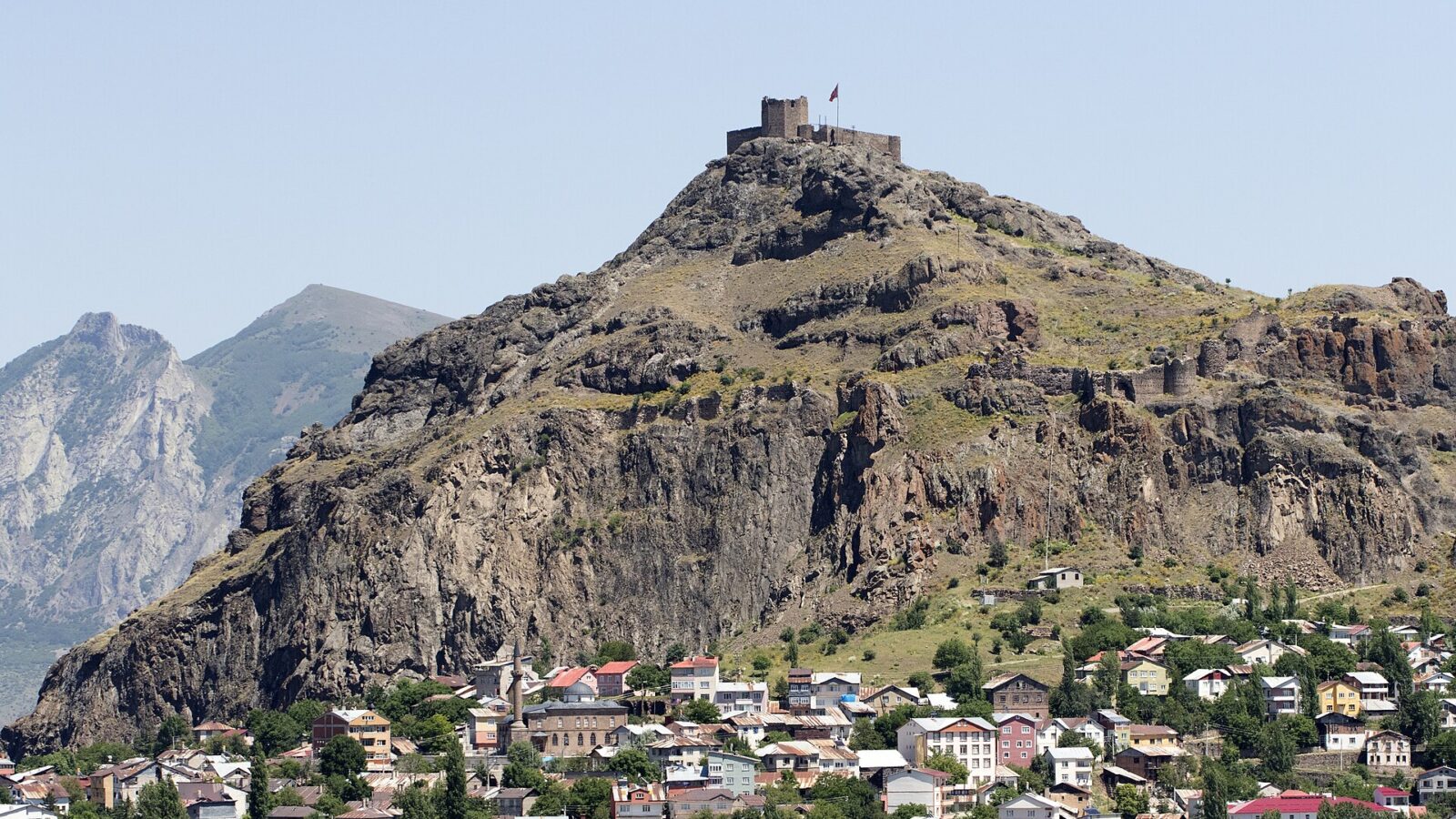
Şebinkarahisar Castle sits on a black volcanic rock that rises straight out of the town of Şebinkarahisar, in the far south of Giresun province. The town’s name says it all: kara hisar means black fortress, and şebin comes from şap, the alum once mined nearby, giving “black fortress of alum”.
This is a very different Giresun from the coast. Şebinkarahisar lies on the inland side of the mountains at around 1,360 m, in dry upland country that looks towards Sivas and central Anatolia. The castle walls follow the edge of the rock, and from the top you look over the town, its old stone houses and the valleys that run south.
How do you get to Şebinkarahisar Castle?
From Giresun, the main road climbs south over the mountains through Dereli and past Tamdere to Şebinkarahisar. It is a long, winding mountain drive, so allow most of a morning. Buses run from Giresun and there are connections with Sivas. In town, the castle rock is unmistakable. A road and paths lead up to the entrance, and the last stretch is a walk on uneven ground.
The nearest airports are Ordu-Giresun on the coast and Sivas Nuri Demirağ Airport to the south.
Tours in Anatolia
−5% Istambul readers save 5% on every tour below — applied at checkout.
Partner listings via GetYourGuide · free cancellation on most
When is the best time to visit Şebinkarahisar Castle?
May to October. Winters on the plateau are cold and snowy, and the mountain road from the coast can be difficult. Summer days are warm and dry here even when the coast is under cloud, which makes a trip south a good escape from Black Sea drizzle.
What is the history of Şebinkarahisar Castle?
The rock was fortified long before the Romans arrived. According to the Byzantine historian Procopius, Pompey captured the fortress after the defeat of Mithridates VI of Pontus, strengthened it and founded a Roman colony here, which is why it became known as Colonia, or Koloneia in Greek. The emperor Justinian rebuilt it in the 6th century. By the 11th century the Byzantines were calling it Mavrokastron, the Black Castle.
In 1201/1202 the fortress passed to the Mengücek dynasty, vassals of the Seljuks of Rum. Mehmed II took the town from the Akkoyunlu in 1461, and after his victory over Uzun Hasan in 1473 it became the centre of an Ottoman sanjak, known as Karahisar-ı Şarki, “Eastern Karahisar”. The Ottomans repaired the old walls and built the citadel complex at the summit.
The 2002 inventory gives the detail of the walls: the present gate and the walls around it belong to the Seljuk (Mengücek) and Ottoman periods, while the inner citadel walls carry the features of 17th–18th-century Ottoman work. The inscription over the gate and a Seljuk double-headed eagle relief were removed and destroyed in 1896.
What is Şebinkarahisar Castle famous for?
- Its setting on a sheer black rock directly above the town.
- Its long military history, from Pompey’s Koloneia to an Ottoman sanjak seat.
- Alum. The mineral mined in the area gave the town the first part of its name.
What can you see at Şebinkarahisar Castle?
The walls and gate. The entrance and surrounding walls are Mengücek and Ottoman work. Inside are the foundations of many buildings.
The inner citadel. The Ottoman citadel on the summit, with 17th–18th-century walls, and views across the town and valleys.
In the town below: the Fahrettin Behram Mosque, built in the 12th century by Muzaffereddin Mehmed in the name of his father, the Mengücek ruler Fahrettin Behramşah; the Kurşunlu Mosque of 1587, restored in 1968; the Taş Mescit of 1352, from the time of the Eretnids; and the Atatürk House, where Atatürk stayed, now a museum.
Meryem Ana Monastery. Outside the town are the ruins of a Greek Orthodox monastery dedicated to the Virgin Mary. Its foundation is thought to go back to the 480s; it flourished in the Ottoman period, and some sources say the medieval monastery burned and was rebuilt in the 19th century.
Around the district. The provincial culture directorate also lists Şebinkarahisar’s old stone hans (Taşhanlar) among its sights. Just north of the town is Tamzara, a neighbourhood and yayla, and on the road back towards the coast Tamdere, 27 km from Şebinkarahisar, is known for its mineral water. East of the town, Alucra has its own summer pasture at Anastos, reached via the village of Kamışlı.
Practical tips. There is no ticket office or visitor centre at the castle, and parts of the walls are ruined, so take care near the rock edges. Combine the castle with the mosques in the town centre and a meal in town; the dry upland air and sunshine make a clear contrast with the coast.



Frequently asked questions about Şebinkarahisar Castle
Where is Şebinkarahisar?
In the inland south of Giresun province, south of the main mountain ridge, at around 1,360 m on the road towards Sivas.
What does Şebinkarahisar mean?
Roughly “black fortress of alum”: kara hisar means black fortress and şebin comes from şap, the alum once mined nearby.
How old is Şebinkarahisar Castle?
The rock was fortified before Roman times. Pompey strengthened it in the 1st century BC, Justinian rebuilt it, and the visible walls are mostly Mengücek and Ottoman.
How do you get from Giresun to Şebinkarahisar?
By car or bus on the road south from the coast via Dereli and Tamdere, a long, winding drive over the mountains. Buses also connect Şebinkarahisar with Sivas.
What do the official records say about Şebinkarahisar Castle?
The present entrance gate of the castle and the walls around it belong to the Seljuk (Mengücek) and Ottoman periods. The inscription over the castle gate and the Seljuk double-headed eagle relief were removed from their place and destroyed in 1896. The inner citadel walls and the structure of the castle walls carry the features of the Ottoman period (17th–18th centuries) to the present day.
The foundation of the Meryem Ana Monastery is thought to date back to the years 481–490. The monastery lived through a fairly brilliant period in Ottoman times. Some sources state that the medieval monastery was destroyed by fire and renewed in the 19th century. (Ministry of Culture and Tourism, Giresun Provincial Tourism Inventory, 2002)
Main photo: Zeynel Cebeci, CC BY-SA 4.0, via Wikimedia Commons.
Ready to see Şebinkarahisar Castle?
Hand-picked tours with good reviews and clear prices.
Partner listings via GetYourGuide · free cancellation on most
Before or after: Istanbul
Most trips start or end in Istanbul. Our own experiences there:

 Dinner, sunset and day cruises between Europe and Asia.See cruises bosporuscruise.com

 Historic Turkish baths in the old city — hand-picked hamams, booked direct.Book a hamam istanbulhamam.com

 Istanbul’s tallest viewpoint: both continents from 369 metres.Get tickets camlicatower.com

 Free audio guides in 15 languages, safe routes and local tips — plus 5% off GetYourGuide.Open the free guide localada.com
Nearby
All destinations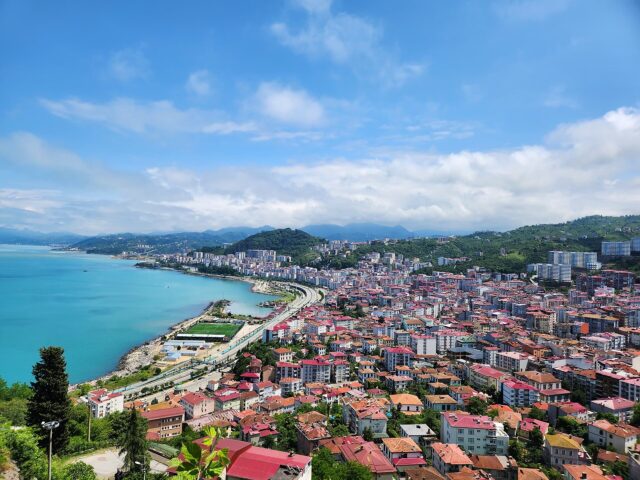
Giresun Castle
Giresun Castle, attributed to Pharnaces I of Pontus: walls, rock-cut…
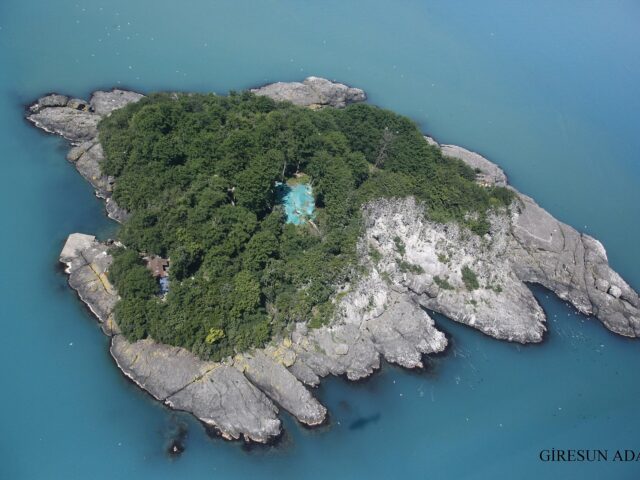
Giresun Island
Giresun Island, the Aretias of the Argonauts: temple and monastery…
Kümbet Plateau
Kümbet Yaylası in Giresun: a 1,640 m summer pasture with…
Bektaş Plateau
Bektaş Yaylası, Giresun’s high pasture at about 2,000 m: Kulakkaya,…
