
Bayburt Castle: Two Kilometres of Walls Above the Çoruh
On this page
- What is Bayburt Castle?
- How do you get to Bayburt Castle?
- When is the best time to visit Bayburt Castle?
- What is the history of Bayburt Castle?
- What is Bayburt Castle famous for?
- What can you see at Bayburt Castle?
- Frequently asked questions about Bayburt Castle
- What do the official records say about Bayburt Castle?
Key facts: Bayburt Castle
- What it is: A fortified citadel with two lines of walls more than 2 km long, up to about 30 m high, on a rocky ridge above the Çoruh.
- Where: North side of Bayburt city centre, on the bank of the Çoruh River.
- Period: Fortified under Justinian (6th century); rebuilt in the early 13th century; repaired by the Ottomans in the 16th century.
What is Bayburt Castle?
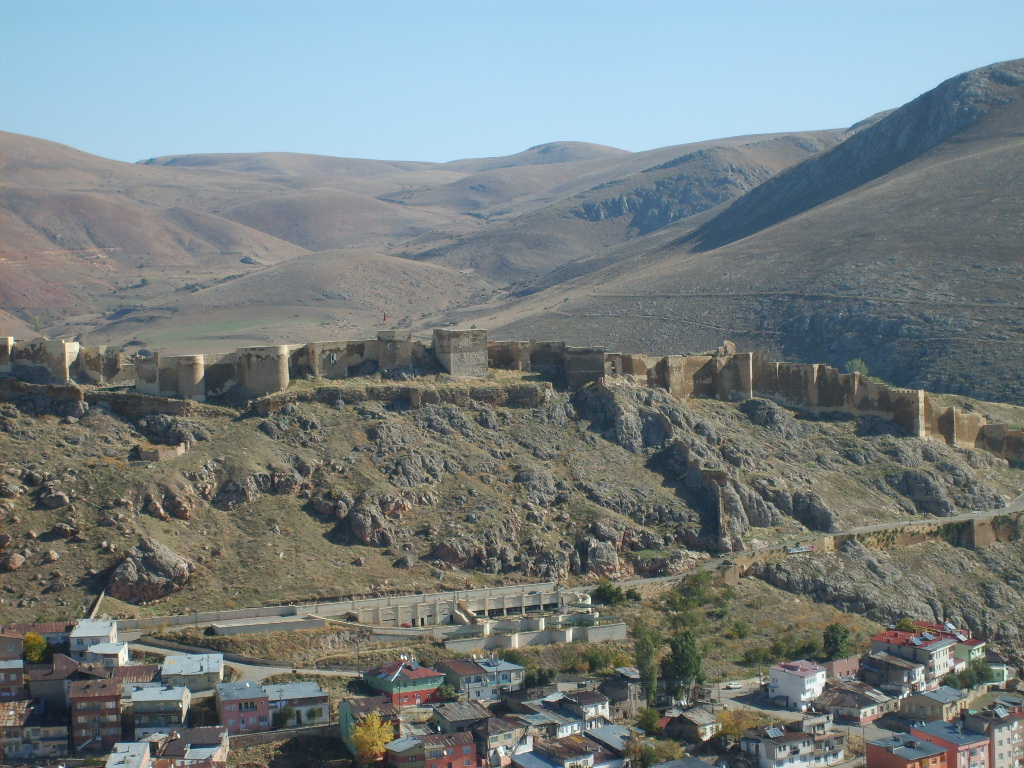
Bayburt Castle (Bayburt Kalesi) runs along a steep, peninsula-like ridge of rock on the north side of Bayburt, with the Çoruh River curving below it. Two lines of walls, each with five or six faces, enclose the summit; together they run for more than 2 km and in places rise about 30 m above the rock, strengthened with round, square and triangular towers. There is no moat: the cliffs do that job.
The 2002 inventory notes that it lies on the trade road over the Zigana and Kop mountains that linked the Black Sea to the Persian Gulf. The head of the recent excavations has described it as Türkiye’s third-largest settlement castle, occupied continuously since the Early Bronze Age.
How do you get to Bayburt Castle?
The castle is in the city. From the centre it is a short but steep walk up the slope to the walls; wear shoes with grip. From Erzurum, Bayburt is about an hour and a half by road over the Kop Pass; from Trabzon, about two and a half hours over the Vavuk Pass.
Tours in Anatolia
−5% Istambul readers save 5% on every tour below — applied at checkout.
Partner listings via GetYourGuide · free cancellation on most
When is the best time to visit Bayburt Castle?
June to September, when the paths are dry. In winter the ridge is snow-covered and exposed to the wind.
Excavation and restoration have been going on since 2017, so parts of the summit may be fenced off. The walls and the views can be enjoyed from the paths and from the riverbank below.
What is the history of Bayburt Castle?
The inventory explains that it is not known for certain who built the castle. Before it was taken by the Turks it was held by the Romans, Byzantines, Arabs and the Komnenoi of Trebizond. The Byzantine historian Procopius records that Emperor Justinian (527–565) fortified Baiberdon, and the two cisterns found in recent excavations date from his reign.
After the Seljuk advance in the 11th century the castle passed into Turkish hands. In the early 13th century Mugisüddin Tuğrulşah, the Seljuk ruler of Erzurum, had it largely rebuilt as a defence against the Empire of Trebizond. For a time it belonged to the Akkoyunlu, and it passed to the Ottomans in 1514, after which, the inventory notes, it was repaired under Süleyman the Magnificent and Murad III. An Ottoman record of 1520 lists 397 guards and large stores of cannon, muskets and war materials.
Evliya Çelebi, who visited Bayburt in 1647, wrote that there was a quarter of 300 houses and the Ebü’l-Feth Mosque inside the castle. He described two great gates, east and west; the eastern one, of three layers of iron, was called Demirkapı (Iron Gate). The castle was occupied and damaged at various times, and finally, during the Ottoman–Russian war of 1828, it was largely destroyed by the Russians.
It was then left unattended until the 1980s, when the parts most at risk were repaired. In 2017 the Ministry of Culture and Tourism began excavation and restoration under the direction of the Bayburt Museum.
What is Bayburt Castle famous for?
- Size. Walls more than 2 km long and up to about 30 m high, following the edge of the cliffs.
- Setting. The Çoruh bends below the ridge, and from the top you look over the whole city and the valley.
- Layers of history. Excavations have found an Iron Age open-air place of worship, Justinian’s cisterns, the plan of an 11th-century church and Ottoman houses.
What can you see at Bayburt Castle?
The walls and towers. The best-preserved stretches of wall and the semicircular, square and triangular towers at the corners.
The excavated areas. The 2017–2018 seasons uncovered two cisterns from the 6th century, the floor plan of an 11th-century church, two adjoining Ottoman houses, each with a hall and five rooms, and an Iron Age open-air shrine. They also produced 165 registered finds, mostly Ottoman pottery such as pipes, bowls, jugs, lamps and plates, along with coins, glass bracelets and metal objects.
The view. From the upper walls you see the old town, the Çoruh bridges and, on clear days, the mountains towards the Kop Pass.
Nearby. The Baksı Museum and Aydıntepe Underground City are each a short drive away.



Frequently asked questions about Bayburt Castle
Who built Bayburt Castle?
Its first builders are unknown. Justinian fortified it in the 6th century, the Seljuk ruler of Erzurum rebuilt it in the early 13th century, and the Ottomans repaired it in the 16th century.
How big is Bayburt Castle?
Its two lines of walls run for more than 2 km and rise up to about 30 m on a steep ridge above the Çoruh.
Can you visit Bayburt Castle?
Yes. It stands above the city centre and can be walked up to; parts may be fenced off during the excavation and restoration that began in 2017.
What was found in the Bayburt Castle excavations?
Two 6th-century cisterns, the plan of an 11th-century church, Ottoman houses, an Iron Age open-air shrine and 165 registered finds, mostly Ottoman pottery.
When was Bayburt Castle destroyed?
Russian forces largely destroyed it during the Russo-Turkish war of 1828–29.
What do the official records say about Bayburt Castle?
Bayburt Castle, reached by crossing the Zigana and Kop mountains, also lies on the trade road that connected the Black Sea to the Persian Gulf. It is not known for certain by whom the castle, built on sheer rocks in the north of the city, was constructed. Before being taken by the Turks, the castle was under Roman, Byzantine, Arab and Komnenos rule. After remaining for a while in the hands of the Akkoyunlu, it passed to the Ottomans in 1514 and was also repaired in the reigns of Süleyman the Magnificent and Murad III.
Evliya Çelebi, who visited Bayburt in 1647, writes that inside the castle there was a quarter of 300 houses and the Ebü’l-Feth Mosque. The castle, which suffered occupation and destruction from time to time, was finally destroyed on a large scale by the Russians during the Ottoman–Russian war of 1828. (Ministry of Culture and Tourism, Bayburt Provincial Tourism Inventory, 2002)
Main photo: Serguzesht, CC BY-SA 3.0, via Wikimedia Commons.
Ready to see Bayburt Castle?
Hand-picked tours with good reviews and clear prices.
Partner listings via GetYourGuide · free cancellation on most
Before or after: Istanbul
Most trips start or end in Istanbul. Our own experiences there:

 Dinner, sunset and day cruises between Europe and Asia.See cruises bosporuscruise.com

 Historic Turkish baths in the old city — hand-picked hamams, booked direct.Book a hamam istanbulhamam.com

 Istanbul’s tallest viewpoint: both continents from 369 metres.Get tickets camlicatower.com

 Free audio guides in 15 languages, safe routes and local tips — plus 5% off GetYourGuide.Open the free guide localada.com
Nearby
All destinationsAydıntepe Underground City
Aydıntepe Underground City in Bayburt: rock-cut galleries and vaulted rooms…
Sırakayalar Waterfalls
Sırakayalar Waterfalls near Bayburt: two falls in a steppe village,…
Baksı Museum
Baksı Museum near Bayburt: contemporary art and village crafts on…
Bayburt
Bayburt travel guide: the castle above the Çoruh, the Baksı…
