
Amasra: Genoese Castle and Twin Harbours
On this page
Key facts: Amasra
- What it is: A harbour town on a small peninsula, the ancient Sesamos and Amastris, with a Byzantine and Genoese castle.
- Where: About 15 km north of Bartın town, Amasra district, Bartın province, on the western Black Sea coast.
- Periods: Founded as Sesamos in the 7th century BC; refounded as Amastris in the Hellenistic period; Genoese from 1261; Ottoman from the mid-15th century.
What is Amasra?
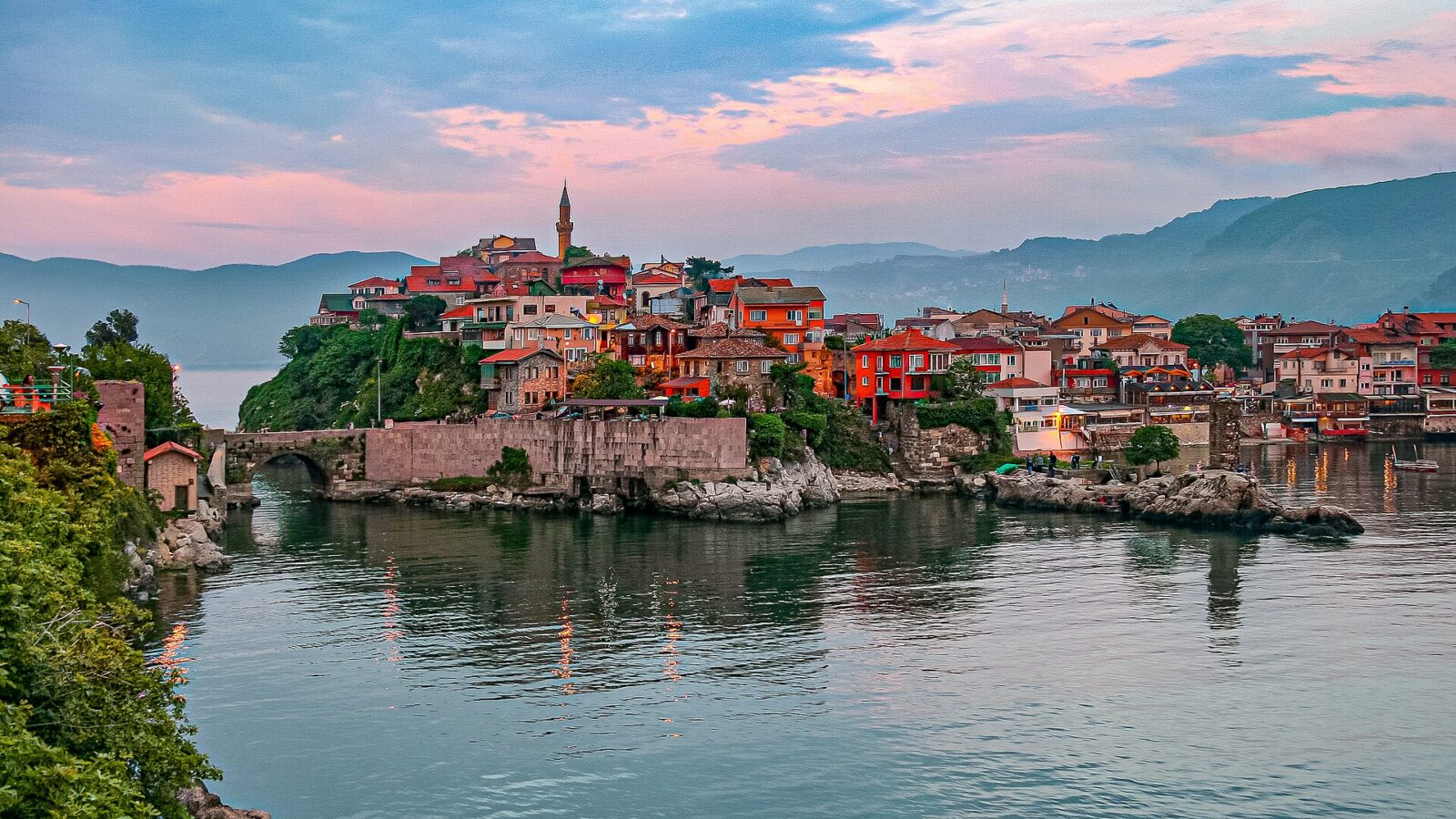
Amasra is a small town on the Black Sea coast of Bartın province, built on a peninsula and a pair of islands. Two harbours, the Büyük Liman (large harbour) and the Küçük Liman (small harbour), lie on either side of the castle, and there are two islands, the larger Büyük Ada and the smaller Tavşan Adası (Rabbit Island).
It is one of the most visited towns on the Turkish Black Sea: in the first eight months of 2024 Amasra, with a population of around 6,600, received about 1.5 million visitors. They come for the fish restaurants on the harbours, the castle walls, the museum and, increasingly, the Roman city that excavations are now bringing back into view.
How do you get to Amasra?
Amasra is about 15 km north of Bartın town. Minibuses run frequently between Bartın’s bus station and Amasra, and Bartın has coaches from Istanbul, Ankara and the cities of the region. On the way you pass the Kuşkayası Monument, about 4 km before Amasra.
The nearest airport is Zonguldak Airport near Çaycuma, with daily Turkish Airlines flights from Istanbul Airport; from there it is a road transfer via Bartın. In town everything is walkable.
Book an Amasra tour
−5% Istambul readers save 5% on every tour below — applied at checkout.
Partner listings via GetYourGuide · free cancellation on most
When is the best time to visit Amasra?
June to September is the season for swimming, harbour dinners and evening walks on the castle walls; it is also when Amasra is busiest, especially at weekends and on public holidays. May and late September to October are calmer and still mild. In winter the town is quiet and the sea often rough.
What is the history of Amasra?
The settlement was founded as Sesamos in the 7th century BC, and Homer mentions Sesamos alongside Cytorus. In the early Hellenistic period Amastris, a niece of the last Persian king Darius III and for a time the wife of Lysimachus, united several small settlements here into one city and gave it her name. Under Rome Amastris prospered; Pliny the Younger, governor of Bithynia and Pontus, asked the emperor Trajan for permission to cover an open drain running beside the city’s main public space.
In Byzantine times the town was sacked by the Rus in the 830s but remained one of the more prosperous Black Sea towns; the hagiographer Niketas David Paphlagon called it “the eye of Paphlagonia“. The Genoese took control in 1261 and rebuilt the front walls and gates of the castle in the 14th and 15th centuries, leaving their coats of arms on the walls. Mehmed II took the town in the mid-15th century (sources give 1458 to 1461), and the 9th-century Byzantine church inside the castle was converted into a mosque.
Much of ancient Amastris lies under the modern town. The 2002 inventory notes that the forum, council house, ceremonial road, a theatre for 5,000 people, the acropolis and the necropolis are underground. Column fragments turned up in 2014 during school construction in the Kum quarter; rescue excavations followed, and in 2024 the site was declared a scientific excavation, led by Prof. Dr. Fatma Bağdatlı Çam of Bartın University. Seven Corinthian columns of a mid-2nd-century stoa, each about 6 m tall, were re-erected in 2025, and the site is due to open to visitors once it is declared an archaeological site.
What is Amasra famous for?
- Its setting: two harbours, two islands and a castle on one small peninsula.
- Amasra Castle, with Roman foundations, Byzantine walls and Genoese gates and coats of arms.
- The Amasra Museum, nicknamed the “museum of chance finds” because most of its objects were found by accident.
- Amasra salad and fresh fish in the harbour restaurants.
- Souvenirs from the Çekiciler Çarşısı, the small bazaar by the castle.
What can you see at Amasra?
Amasra Castle. Built in the Roman period, with walls added by the Byzantines and front walls and gates by the Genoese in the 14th and 15th centuries. It has two main parts, Sormagir and Zindan. A tunnel under the castle leads to a freshwater pool. Look for the Genoese coats of arms on the gates.
Kemere Bridge. A bridge of Roman origin, restored several times, linking Zindan island, part of the castle, with the town.
The church-mosque. A 9th-century Byzantine church inside the castle, converted into a mosque after the Ottoman conquest and still used for prayer. The inventory mentions two churches among Amasra’s visible ancient remains.
Amasra Museum. Housed in a building begun in 1884 as a naval school and never finished, it opened as a museum on 30 January 1982 and was later renovated. It displays finds from the Hellenistic, Roman, Byzantine, Genoese and Ottoman periods, including a torso of Hadrian, a relief of Nike in a quadriga, a statue of the snake god Glykon, Genoese coats of arms and a model shipwreck hall.
The Roman stoa. In the Kum quarter, seven re-erected columns of the mid-2nd-century stoa of Amastris; finds from the 2025 season, including statues, coins and inscriptions, have been shown in a display area on site.
Bedesten. The ruin known as the bedesten, which excavations have shown to be a Roman bath; a head of Alexander the Great and statues of a nymph and a Lar were found in the excavations.
Direkli Kaya and the harbours. A marble pier with steps cut into the rock, and the waterfronts of both harbours, lined with fish restaurants. The Kuşkayası Monument is a short drive inland.



Frequently asked questions about Amasra
How far is Amasra from Bartın?
About 15 km north. Minibuses run frequently from Bartın’s bus station.
Is Amasra worth visiting?
Yes. It combines a castle with Genoese coats of arms, a good small museum, Roman remains under excavation and fish restaurants on two harbours.
What is the nearest airport to Amasra?
Zonguldak Airport near Çaycuma, with daily flights from Istanbul. Kastamonu Airport is an alternative.
What is Amasra famous for?
Its peninsula setting with two harbours and two islands, its castle, its museum of chance finds, and Amasra salad served with fresh fish.
When is Amasra busiest?
Summer weekends and public holidays. Visit midweek or in May, late September or October for a quieter stay.
What do the official records say about Amasra?
There are many ancient cities within the historical region of Paphlagonia. Of these, Sesamos (Amasra), Kromna (Kurucaşile) and Erythinoi (Çakraz) are within the borders of Bartın. The place where archaeological sites are seen most is Amasra district. The castle in the town centre with the coats of arms on it, two churches, the bedesten, the Kuşkayası Road Monument and the Hermit’s Cave count as the visible face of the ancient city. Parts such as the forum, the council palace, the road of honour, the theatre for five thousand people, the acropolis and the necropolis are underground.
Construction of the Amasra Museum building began in 1884 with the aim of making it a Naval School. The school, which could not be finished because of the wars, has since 1982 been the only museum of the region, exhibiting archaeological and ethnographic works. (Ministry of Culture and Tourism, Bartın Provincial Tourism Inventory, 2002)
Main photo: Jorge Franganillo, CC BY 2.0, via Wikimedia Commons.
Ready to see Amasra?
Hand-picked tours with good reviews and clear prices.
Partner listings via GetYourGuide · free cancellation on most
Before or after: Istanbul
Most trips start or end in Istanbul. Our own experiences there:

 Dinner, sunset and day cruises between Europe and Asia.See cruises bosporuscruise.com

 Historic Turkish baths in the old city — hand-picked hamams, booked direct.Book a hamam istanbulhamam.com

 Istanbul’s tallest viewpoint: both continents from 369 metres.Get tickets camlicatower.com

 Free audio guides in 15 languages, safe routes and local tips — plus 5% off GetYourGuide.Open the free guide localada.com
Nearby
All destinations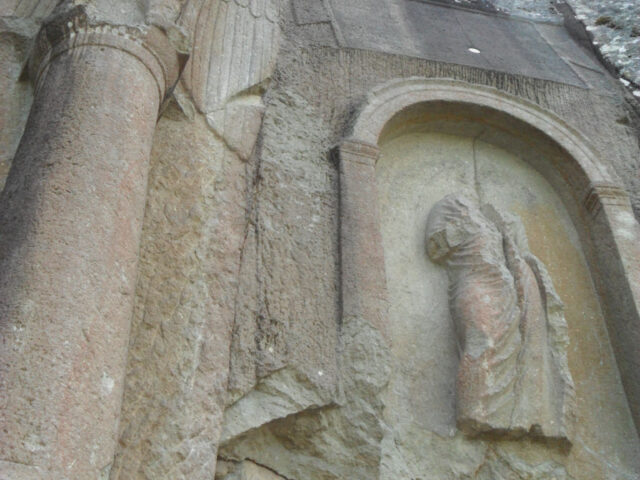
Kuşkayası Monument
Kuşkayası Monument near Amasra: a Roman road memorial of Claudius's…
Güzelcehisar Basalt Columns
Güzelcehisar Basalt Columns near Bartın: a nature monument of columnar…
Bartın
Bartın travel guide: Amasra's harbours and castle, the Roman Kuşkayası…
Bingöl
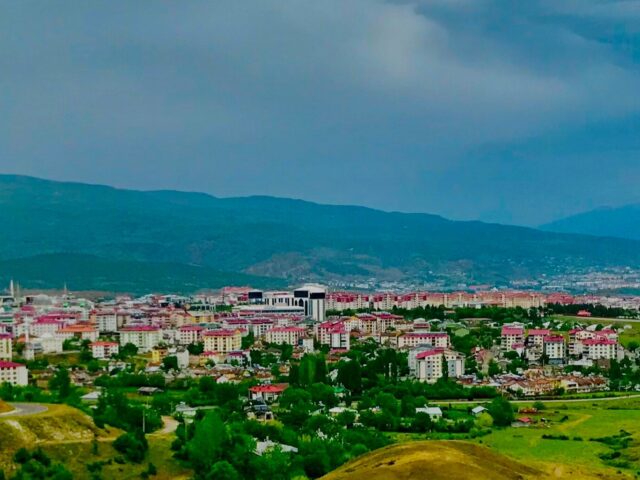
Bingöl travel guide: the floating islands of Solhan, the lakes…
