

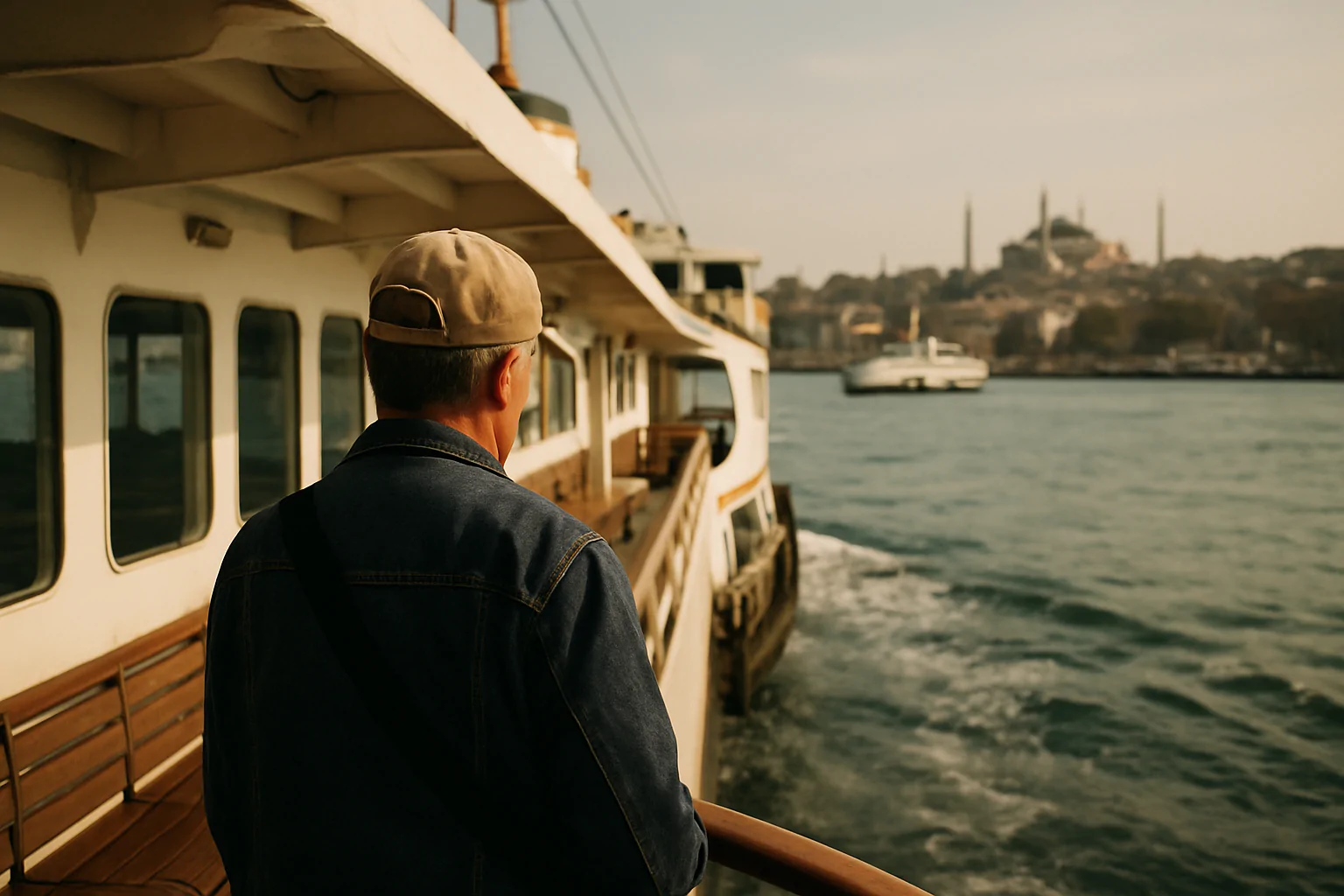
Istanbul’s Bosphorus ferry system runs on two separate networks: public commuter boats operated by Şehir Hatları, and privately run sightseeing cruises. For everyday crossings between Kadıköy, Üsküdar, Eminönü and Beşiktaş, load an Istanbulkart and hop on like a local. For a longer look at the strait with commentary and open-deck views, book a scheduled cruise, as of September 2026.
- Crossing time: a single hop across the strait is short; a full sightseeing loop runs to two or two and a half hours depending on the route.
- Closed days: none — public ferries run every day of the year, with a lighter timetable on national holidays.
- Nearest tram/metro: Eminönü pier sits beside the T1 tram stop of the same name; Karaköy pier is a short walk from the Tünel funicular.
- Booking ahead: not required for the public ferry — just a topped-up Istanbulkart. A seat on a scheduled sightseeing cruise is worth reserving the day before, especially in July and August.
- Dress code: none — this is open-air public transport and casual sightseeing, not a religious site.
How Does the Bosphorus Ferry System Work?
| Option | Price | Duration |
|---|---|---|
| Bosphorus day sightseeing cruise | from €12 | 2 hours |
| Bosphorus sunset cruise | from €50 | 2 hours |
| Bosphorus dinner cruise with Turkish show | from €30 | 3 hours |
| Private yacht charter | from €115/hour | — |
| Event boat charter | from €300/hour | — |
The Bosphorus ferry system is really two systems sharing the same piers. Şehir Hatları, Istanbul’s municipal ferry company, runs the commuter lines that cross and travel up the strait as part of the ordinary public transport network, alongside the metro, tram and bus. These boats are cheap, frequent and used daily by residents commuting between the European and Asian sides, so timetables are built around rush hour rather than tourist sightseeing. Layered on top of that public grid are private sightseeing cruises, timed and routed specifically for visitors, with commentary, open decks and a fixed loop rather than a point-to-point commute.
Both systems use the same stretch of water and often the same landing stages, which is where first-time visitors get confused. A public ferry ticket bought through an Istanbulkart will not get you onto a private sightseeing cruise, and a cruise ticket will not work on the public commuter line. Read the sign or the boat’s livery before boarding: Şehir Hatları vessels are marked with the company’s branding and city ferry numbers, while sightseeing operators sell tickets from booths or online in advance. If you only want transport from one side of the city to the other, the public ferry is the simpler and more direct choice.
Public Ferries or a Sightseeing Cruise?
Choose the public ferry for a simple crossing and a sightseeing cruise for a longer, guided loop of the strait. A public Şehir Hatları boat between, say, Kadıköy and Eminönü gets you across the water quickly and cheaply, with views of the skyline included as a bonus rather than the point of the trip. It stops only at its scheduled piers and does not slow down for photographs, which suits commuters and travellers on a tight schedule equally well.
A sightseeing cruise, by contrast, is built around the view. A Bosphorus day sightseeing cruise, for example, runs for about two hours with an on-board audio guide and open-deck viewing, departing at set times through the day. Longer options add a live English-speaking guide, a welcome drink or an evening show, aimed squarely at visitors who want the strait itself to be the destination rather than a means of getting somewhere. If your priority is photographs of the waterfront palaces, the bridges and the wooden yalı houses along the shore, the slower cruise format serves that purpose far better than a commuter run ever will.
Piers and Access Points
The main piers for both public ferries and sightseeing cruises cluster around Eminönü, Karaköy, Kabataş, Beşiktaş, Üsküdar and Kadıköy. Eminönü, on the old city side, is the traditional hub for both commuter lines and several sightseeing operators, and sits within easy walking distance of the Spice Bazaar in Eminönü if you want to combine a ferry ride with a market visit. Karaköy, just across the Golden Horn, is used by other sightseeing cruises and is a short walk from the funicular up to Galata’s old streets and tower.
On the Asian side, Kadıköy and Üsküdar are the two piers most travellers will use, whether commuting for the day or simply crossing to see the other half of the city. Kadıköy’s food streets and market make a natural reason to cross over and back by ferry rather than by bridge or tunnel. Kabataş, further along the European shore near Beşiktaş, is the departure point for some evening and dinner cruises and connects easily to the funicular up to Taksim Square. None of these piers require advance booking simply to walk up and buy a public ferry ticket; queueing systems and gates only really apply to the pre-booked sightseeing cruises.
How Much Does a Bosphorus Ferry Cost?
Public ferry fares are set and adjusted by Istanbul’s transport authorities and are best checked directly before travelling, since they are revised periodically and this guide will not repeat a figure that might already be out of date by the time you read it. The practical answer is to load an Istanbulkart, Istanbul’s rechargeable transport card, and tap in at the turnstile; the fare is deducted automatically and the current rate is published on the card’s own site, Istanbulkart’s official information pages. The same card works on trams, the metro and buses, so it is worth topping up generously if you plan to move around the city by more than one mode of transport.
Sightseeing cruise pricing is more stable because it is set directly by the operator rather than by a public tariff. A Bosphorus day sightseeing cruise starts from €12 per person as of September 2026, according to the operator’s own booking pages, while a sunset cruise with a live English-speaking guide and welcome drink starts from €50 per person over the same period. At the top end, private yacht charters start from €115 per hour with a two-hour minimum, again as published by the operator in September 2026, which suits small groups wanting their own route and timing rather than a fixed itinerary.
How Long Does a Bosphorus Crossing Take?
A single public ferry crossing between the European and Asian shores is short — often shorter than the time it takes to find the right pier and queue at the turnstile. Because Şehir Hatları times its commuter routes for residents getting to work, boats run frequently through the morning and evening peaks and less often in the middle of the day, so the wait between departures can matter more than the crossing itself. If you are simply hopping from Kadıköy to Eminönü or back, plan around the timetable posted at the pier rather than assuming a fixed frequency all day.
Sightseeing cruises run to fixed, published durations because the whole point is the time spent on the water. A Bosphorus day sightseeing cruise runs for two hours, while the Golden Horn sightseeing cruise, which loops through the estuary rather than the open strait, runs for about two and a half hours with a stop of roughly ninety minutes built in at Miniatürk. The Golden Horn itself is a natural estuary that separates the old city from Beyoğlu, and a cruise along it passes a different set of landmarks — mosques, churches and museums — than a straight run up the Bosphorus.
Best Time of Day and Route Choice
The best time to ride depends on whether you want fewer crowds or better light for photographs. Early morning departures, before the day’s tour groups reach the piers, tend to be quieter on both public ferries and sightseeing cruises, while the late afternoon and early evening slots catch the sun lower over the water and the skyline lit gold. A sunset cruise timed for the early evening in summer is popular for exactly this reason, and departures for that route are set for the warmer months rather than held constant year-round.
Route choice matters as much as timing. A straightforward Bosphorus loop suits anyone who wants palaces, bridges and open water in one trip, while the Golden Horn route suits anyone more interested in the old city’s religious and cultural sites along a calmer, narrower waterway. Both depart from piers close to the Bosphorus waterfront itself, so it is easy to compare timetables side by side at Eminönü or Karaköy before deciding which one fits your day better. For transport planning across the wider city, Istanbul’s own transport authority publishes route maps and service updates at the Istanbul Metropolitan Municipality’s official site.
Frequently Asked Questions
Do I need to book a public Bosphorus ferry in advance?
No. Public Şehir Hatları ferries are walk-up transport — tap an Istanbulkart at the turnstile and board.
Can I use the same ticket for a public ferry and a sightseeing cruise?
No. They are separate systems with separate tickets, even when they share a pier.
What is the difference between the Bosphorus cruise and the Golden Horn cruise?
The Bosphorus cruise runs along the open strait past palaces and bridges, while the Golden Horn cruise loops through the narrower estuary past mosques, museums and Balat.
Is the Bosphorus ferry system open every day, including holidays?
Yes, but with a reduced timetable on national holidays, so check departure boards at the pier that day.
Which pier is closest to central sightseeing on the old city side?
Eminönü, within walking distance of the Spice Bazaar and the tram network into Sultanahmet.
How far ahead should I book a sunset or dinner cruise?
About a day ahead is usually enough, though July and August fill up faster and reward earlier booking. If a straightforward crossing is all you need, the public ferry system with an Istanbulkart handles it simply and cheaply, and if you would rather spend an evening or a sunset properly on the water, the Bosphorus sightseeing cruise schedule is the practical way to book one directly.

Comment (0)