

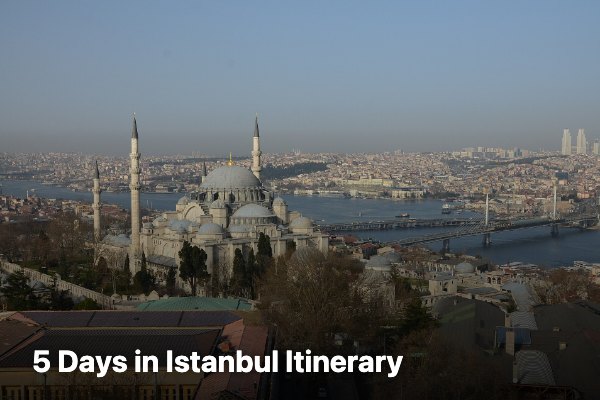
Five days is the point where Istanbul stops being a checklist and becomes a city you have actually spent time in. Four days covers the monuments. The fifth day buys you the Princes’ Islands, or the city walls and the Chora mosaics, or a slow morning in a neighbourhood market with nothing scheduled after it.
The plan below groups each day by geography, because that is the only way to move through a city split across two continents without losing hours to bridges and ferry queues. It also works around the closing days, which is the single biggest cause of wasted mornings here.
5 day Istanbul itinerary at a glance
| Day | Area | Main sights | Watch out for |
|---|---|---|---|
| 1 | Sultanahmet, historic peninsula | Hagia Sophia, Blue Mosque, Hippodrome, Basilica Cistern | Mosque prayer closures, heaviest crowds after 11:00 |
| 2 | Topkapi and the bazaars | Topkapi Palace, Archaeology Museums, Grand Bazaar, Spice Bazaar | Palace closed Tuesdays, bazaars closed Sundays |
| 3 | The Bosphorus and Besiktas | Dolmabahce Palace, Bosphorus cruise, Ortakoy | Dolmabahce closed Mondays, timed entry |
| 4 | Beyoglu, Galata and Karakoy | Galata Tower, Istiklal Caddesi, Taksim Square, a hammam | Galata Tower queues, book a hammam ahead |
| 5 | Asian side or Princes’ Islands | Kadikoy market, Moda, Camlica Hill, or Buyukada by ferry | Islands need a full day and calm weather |
Day 1, the historic peninsula
Everything today sits inside a fifteen minute walk of Sultanahmet Square, which is the only district in Istanbul where that is true.
Morning. Be at Hagia Sophia when the doors open. The queue at 09:00 is a fraction of what it becomes by 11:00, and the light coming through the upper gallery windows is at its best in the first two hours. Allow ninety minutes inside.
Late morning. Cross the square to the Blue Mosque. Check the prayer times posted at the visitor entrance, because the mosque closes to visitors for around thirty minutes at each of the five daily prayers and for considerably longer around Friday noon. Head coverings are provided free at the door and you do not need to buy one from the stalls outside.
Midday. The Hippodrome runs along the western side of the square and takes twenty minutes to walk end to end. The Obelisk of Theodosius, the Serpent Column, the Walled Obelisk and the German Fountain are all here, and the flat ground under your feet is the old Byzantine chariot track.
Afternoon. Go underground. The Basilica Cistern is the famous one and queues accordingly. The Theodosius Cistern, nine minutes’ walk away near Cemberlitas, is a tenth of the size with a projection mapping show and almost no queue.
Late afternoon. The Museum of Turkish and Islamic Arts sits on the western side of the Hippodrome and holds the carpet collection, which is worth an hour if the weather has turned.
A slower version of this day, with eating stops built in, is in the Sultanahmet day guide.
Day 2, Topkapi Palace and the bazaars
Morning. Topkapi Palace needs three hours minimum if you include the Harem, which is a separate ticket and is the better half of the visit. Arrive at opening. The palace is closed on Tuesdays, so if day two lands on a Tuesday, swap it with day three.
Midday. The Istanbul Archaeology Museums sit in the palace’s first courtyard and are included in the same complex. The Alexander Sarcophagus alone justifies the detour, and the museum is consistently quieter than the palace above it.
Afternoon. Walk downhill through Gulhane Park, then west to the Grand Bazaar. Sixty one covered streets and around four thousand shops. Go in through the Nuruosmaniye gate, which puts you on the main axis rather than in the tourist carpet section.
Late afternoon. The Spice Bazaar is ten minutes downhill toward Eminonu. Smaller, louder, and better for edible things you will actually take home. Both bazaars close on Sundays.
Evening. The Suleymaniye Mosque complex is uphill from the Spice Bazaar and its terrace looks out over the Golden Horn. Sunset from here costs nothing and beats most paid viewpoints in the city.
Day 3, the Bosphorus and the palaces
Morning. Take the T1 tram to Kabatas for Dolmabahce Palace. Entry is by timed guided tour and the last admission falls well before closing, so arriving before 11:00 avoids being turned away. Closed Mondays.
Afternoon. A cruise on the Bosphorus from Kabatas is the most efficient sightseeing hour available in Istanbul. The shoreline delivers Ottoman palaces, wooden yali mansions, two intercontinental bridges and the Rumeli Fortress in sequence, and you do not have to move. A standard sightseeing sailing runs about two hours as far as the Fatih Sultan Mehmet Bridge and back.
Evening. Ortakoy sits directly under the Bosphorus Bridge, fifteen minutes by taxi from Kabatas or a pleasant walk along the shore from Besiktas. The waterfront mosque is the photograph everyone takes. In summer an evening dinner cruise replaces this and handles dinner at the same time.
Day 4, Beyoglu, Galata and a hammam
Morning. Walk across the Galata Bridge from Eminonu, which takes fifteen minutes past the fishermen on the upper deck and the fish sandwich boats below. Galata Tower is a short, steep climb from the northern end. The viewing gallery is narrow and congests quickly, so early is better here too.
Midday. Istiklal Caddesi runs 1.4 kilometres from Tunel up to Taksim Square. The historic red tram runs its length, though walking is usually faster given the crowds. The interesting parts are the side streets and the covered passages off the eastern side.
Afternoon. This is the natural slot for a Turkish bath. Beyoglu, Karakoy and the old city hold most of the historic hammams, a full visit runs ninety minutes to two hours, and it is the one activity that improves after four days of walking. Book ahead, since the historic baths work on reservations and some split men’s and women’s hours rather than running separate sections.
Evening. Karakoy, below Galata, has the contemporary galleries, the coffee and the rooftop bars that look back at the illuminated peninsula. That view is the reverse of the one you had from Suleymaniye on day two.
Day 5, the Asian side or the Princes’ Islands
Two options, and they suit different travellers. Take the Asian side if you want a city day, the islands if you want to leave the city entirely.
Option A, the Asian side
Morning. Ferry from Eminonu or Kabatas to Kadikoy, about twenty minutes and the price of a normal transit fare. The produce market inland from the terminal is a working neighbourhood market rather than a tourist one. The fish counters, cheese stalls and pickle shops around Gunesli Bahce Sokak are the reason to come, and a proper Turkish breakfast here takes ninety minutes if you do it right.
Afternoon. Walk twenty five minutes south along the shore to Moda, which is quieter, tree lined and full of secondhand bookshops. The coastal park is where the city sits on the grass in the late afternoon.
Late afternoon. Camlica Hill is the highest point over the city and takes in both bridges, the Golden Horn and the islands on a clear day. Taxi from Kadikoy, roughly twenty minutes. Arrive forty five minutes before sunset and you get daylight, golden hour and the lights coming on from the same bench.
Option B, the Princes’ Islands
All day. Ferries to Buyukada leave from Kabatas, Eminonu and Bostanci and take between forty five and ninety minutes depending on the service. Motor vehicles are banned on the islands, so transport is electric minibus, bicycle or on foot. The wooden mansions, the pine woods and the sea are the whole point. Allow the full day, and check the forecast, because these are open Marmara crossings and services are cancelled in a strong southwesterly.
How much does 5 days in Istanbul cost?
Attraction pricing in Istanbul changed substantially over recent years, with separate rates for Turkish residents and foreign visitors at most state and municipal sites. Foreign visitor tickets at the major museums run well above the resident price, and the gap is widest at the headline monuments.
Some practical notes that affect the budget more than the ticket prices themselves.
Transport is cheap and the card is compulsory. Buy an Istanbulkart at any metro or tram station on arrival. One card can be shared between several people by tapping repeatedly, and it covers the tram, metro, funicular, ferries, buses and the Marmaray tunnel. Cash is not accepted on most lines.
The Museum Pass does not cover everything. It applies to Ministry of Culture sites, which includes Topkapi Palace and the Archaeology Museums. It does not cover municipally run attractions, and it has never covered the private hammams. Count the specific sites you plan to enter against the pass price rather than assuming it pays for itself over five days.
Several municipal sites are card only. A number of them take credit or debit cards and Istanbulkart but refuse cash outright, including foreign currency. Carry a card that works abroad.
Free things worth building in. Every mosque, including Suleymaniye and the Blue Mosque. The Galata Bridge. The public ferries across the Bosphorus, which cost a transit fare and deliver the same water views as a sightseeing boat. Gulhane Park. The Moda shoreline.
Is 5 days in Istanbul enough?
For the city itself, comfortably. Five days covers every major monument, both continents, one bazaar day, one water day and one district day, with room for unhurried meals and at least one afternoon that goes wherever it goes.
What five days does not cover is a day trip beyond the city. Bursa, Edirne, the Black Sea coast villages and Sile all need a full day each including travel. If any of those matter to you, treat this as a six or seven day plan rather than trying to compress it.
If you have less time, the three day itinerary drops the Asian side and the second bazaar day.
With only a weekend, the two day version holds to the historic peninsula and the Bosphorus, which is the minimum that still makes the trip worthwhile.
How to get around Istanbul over five days
The T1 tram is the spine of this itinerary, running from Kabatas through Sultanahmet to Beyazit and on toward the city walls. Between the tram and the ferries you can reach almost everything above.
Taxis are inexpensive by European standards and slow by any standard. The coastal road and both Bosphorus bridges seize up between 08:00 and 10:00 and again from 17:00 to 20:00. Crossing between continents by road at those hours can take an hour for a distance the ferry covers in twenty minutes. Take the boat.
The Marmaray runs under the Bosphorus between Sirkeci and Uskudar in four minutes, which is the fast option when the weather has stopped the ferries.
Istanbul is hillier and larger than a map suggests. Sultanahmet to Taksim is four kilometres on paper and a serious walk in practice. Plan on transport between districts and walking within them.
When to visit Istanbul
| Season | Conditions | Verdict |
|---|---|---|
| April to May | Highs around 17 to 22 degrees, tulips in the parks, 8 to 10 rainy days a month | The best window of the year |
| June to August | Highs around 27 to 30 degrees, humid, only 3 to 5 rainy days a month | Hot and crowded, long evenings |
| September to October | Highs around 21 to 26 degrees, clear, thunderstorms possible in September | The second best window |
| November to March | Highs around 10 to 16 degrees, 11 to 16 rainy days a month, snow in January and February | Grey and wet, short queues and low prices |
December is the wettest month of the year in Istanbul, averaging around 99 mm of rain over fifteen or sixteen rainy days. Winter rain here is persistent drizzle rather than short heavy showers, so a wet December day tends to stay wet.
Two dates worth checking before booking. Ramadan changes the rhythm of the city, with mosques busier and evenings livelier. The religious holidays that follow it are national holidays when domestic travel peaks and some businesses close.
Practical notes worth knowing in advance
Closing days. Topkapi Palace closes Tuesdays. Dolmabahce Palace closes Mondays. The Grand Bazaar and Spice Bazaar close Sundays. Building the week around these three facts saves more time than any other piece of planning.
Mosque dress. Women cover hair, shoulders and knees. Men avoid shorts. Shoes come off at the door. Working mosques outside the tourist district, particularly on the Asian side and in Eyupsultan, expect this more strictly than the Sultanahmet monuments do.
Booking ahead. Hagia Sophia, Topkapi Palace and Dolmabahce Palace all need advance timed tickets in high season. Hammams and evening cruises fill on Friday and Saturday year round.
Cash. Cards work almost everywhere including transport top ups, but the bazaars, small cafes and the street food stalls run on lira in cash.
If you are still building the shortlist, the Istanbul bucket list covers what makes the cut and what does not.
Frequently asked questions
Is 5 days in Istanbul enough?
Yes for the city itself. Five days covers the historic peninsula, the bazaars, the Bosphorus, Beyoglu and either the Asian side or the Princes’ Islands, without rushing any of them. It is not enough to add a day trip to Bursa or Edirne on top.
How much money do you need for 5 days in Istanbul?
The variable costs are accommodation and museum entry, since foreign visitor ticket prices at the major sites are considerably higher than resident rates. Transport is inexpensive on an Istanbulkart, and eating well costs little if you move away from Sultanahmet. Check current ticket prices directly with each site, since they have been revised repeatedly.
What should you do on your first day in Istanbul?
Sultanahmet, on foot. Hagia Sophia at opening, the Blue Mosque afterwards, the Hippodrome at midday and a cistern in the afternoon. It puts the four best known sights within one walkable square while you still have the most energy, and it orients you to the rest of the city.
Can you see the European and Asian sides in five days?
Yes, and you should. The crossing takes about twenty minutes by ferry and costs a normal transit fare. Give the Asian side a full day rather than half of one, since Kadikoy, Moda, Uskudar and Camlica Hill are spread out.
Is the Istanbul Museum Pass worth it for five days?
Only if you enter enough Ministry of Culture sites to clear the price. It covers Topkapi Palace and the Archaeology Museums but not the municipally run attractions and not the hammams. Count your specific list against the pass cost.
Where should you stay for a five day trip?
Sultanahmet if you want to walk to the monuments, Beyoglu or Karakoy if you want restaurants and nightlife within reach. Both are on the European side and both connect to the T1 tram, which is what matters for this itinerary. The Asian side is cheaper and quieter but adds a daily crossing.
Do you need a guide in Istanbul?
Not for navigation, which is straightforward on the tram and the ferries. A licensed guide adds most value inside Topkapi Palace and Hagia Sophia, where the context is dense and the signage is thin. For everything else, self guided works.
What is the best order to see Istanbul in five days?
Peninsula, then palace and bazaars, then the Bosphorus, then Beyoglu, then the Asian side or the islands. This front loads the timed and ticketed sights while you are freshest, and leaves the two most flexible days at the end where they can absorb rain or a closure.

Comment (0)